Amazon Affiliate Disclosure
Schopping may earn a commission from qualifying purchases made through affiliate links, including Amazon affiliate links. This does not change the price you pay. Our editorial approach is built around product usefulness, category fit, feature quality, safety signals, long-term value and real-world practicality.
Updated on July, 2026.
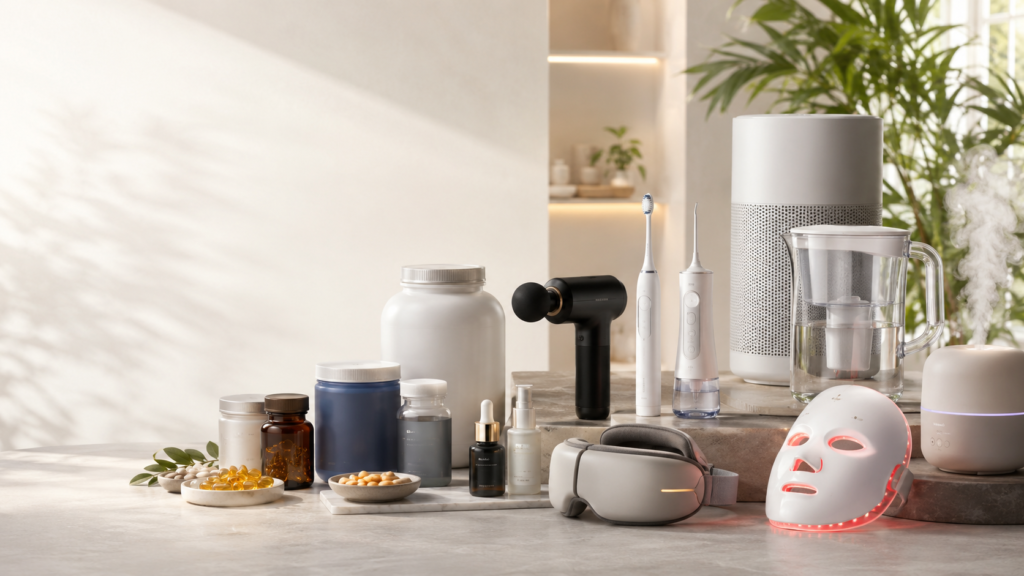
Wellness products are no longer a small shelf of vitamins, tea bags and basic fitness accessories. They now include smart recovery devices, air quality monitors, red light therapy tools, oral care technology, longevity supplements, hydration powders, home water filters, skin devices and daily health gadgets designed to make personal care more measurable, consistent and practical. At Schopping, this wellness center is built for people who want to compare health and wellness products with a sharper eye: what they do, who they suit, when they are worth buying, and when a simpler option may be enough.
The modern wellness routine has become a personal operating system. Some products support the inside of the body, such as vitamin D, magnesium, omega-3, probiotics, creatine and protein powder. Others shape the outside environment, such as air purifiers, humidifiers, water filters and non-toxic home products. Then there are tools that help with recovery, appearance, oral hygiene and daily comfort: massage guns, TENS units, red light devices, electric toothbrushes, water flossers, LED face masks, neck massagers and eye massagers.
The challenge is not finding products. The challenge is choosing intelligently.
A person can spend heavily on wellness supplements and gadgets without building a better routine. A crowded cabinet does not equal better health. A smarter approach begins with the goal: better sleep, fewer aches, cleaner air, stronger bones, better oral hygiene, healthier skin, improved hydration, muscle support, stress support, or more consistent daily energy. From there, the right product category becomes clearer.
This guide organizes the best products for health and wellness into practical sections so you can move from broad interest to focused decision-making.
Quick Picks
Use these navigation links to jump directly to the section that matches your current need.
| Jump To | Best For |
|---|---|
| Supplements, Vitamins & Nutrition | Vitamins, minerals, protein, collagen, creatine, probiotics, omega-3 and longevity supplements |
| Recovery, Pain Relief & Body Care | Massage guns, TENS units, heating pads, compression boots, sauna blankets and cold plunge tools |
| Air, Water & Home Wellness | Air purifiers, humidifiers, dehumidifiers, water filters, shower filters and non-toxic home products |
| Oral Care & Hygiene Tech | Electric toothbrushes, water flossers, tongue scrapers, toothpaste, mouthwash and whitening products |
| Beauty, Skin & Longevity Devices | Red light therapy, LED masks, microcurrent, skincare serums, sunscreen and hair devices |
| Supplement Science & Comparison Guides | Supplement quality, forms, certifications and ingredient comparisons |
| The 7-Point Checklist | Use this checklist before choosing health and wellness products |
Why Wellness Products Need a Smarter Shopping Framework
The wellness market has a unique problem: almost every product sounds useful.
A magnesium supplement may promise relaxation. A red light therapy mask may promise better-looking skin. A massage gun may promise muscle recovery. A probiotic may promise gut support. An air purifier may promise cleaner breathing. A greens powder may promise daily nutrition. A water flosser may promise better gum care.
The issue is not that these categories are useless. Many can be valuable when chosen for the right person, the right goal and the right routine. The issue is that wellness products often sit between science, marketing, lifestyle aspiration and habit design. A product may be well-made but unnecessary for your situation. Another may be simple, affordable and more useful than the expensive version.
A smarter framework looks at five things before the price tag:
- The goal
What problem is this product solving? Recovery, sleep, hydration, oral hygiene, air quality, skin care, pain relief, nutrient support or daily energy? - The mechanism
Does the product have a clear reason for working? Is it delivering a nutrient, filtering air, applying heat, creating resistance, supporting flossing, humidifying a room, or tracking a measurable signal? - The fit
Will you use it consistently? A large cold plunge tub may be impressive, but a heating pad or massage gun may fit daily life better for many people. - The risk profile
Supplements can interact with medications. Skin devices can irritate sensitive skin. Cold exposure may not suit certain people. Whitening products can cause sensitivity. Strong wellness products should be chosen with common sense and, when needed, professional guidance. - The upgrade path
Not every routine needs the premium device first. Often, a person should begin with the product that solves the most obvious bottleneck, then upgrade when the habit is already established.
This is why a wellness product hub needs more than lists. It needs organization, comparison, context and clear internal pathways.
If you are still deciding where to begin, the Core Wellness Buying Guides section is the best first stop for comparing wellness tech, home gadgets, supplement basics, workplace wellness tools and the larger question of whether wellness gadgets are worth buying.
The Schopping Wellness Decision Framework
A strong wellness routine is not built by collecting products. It is built by identifying bottlenecks.
Think of wellness like a home system. If the air is poor, a supplement will not clean the room. If protein intake is low, a red light device will not build muscle. If brushing technique is weak, a whitening kit will not fix gum-line plaque. If sleep timing is chaotic, a melatonin supplement may not solve the root pattern.
The Schopping framework organizes health and wellness products through four lenses.
1. Input Products
These are products you ingest or add to your nutrition pattern. They include wellness supplements, vitamins, minerals, protein powders, electrolytes, probiotics, prebiotics, greens powders, fiber and longevity supplements.
Input products can be useful, but they require more caution than many gadgets because they interact directly with the body. The most sensible question is not “What is trending?” but “What gap is this product meant to fill?”
Examples include:
- Vitamin D for people with low sun exposure or confirmed deficiency risk
- Vitamin B12 for people who may not get enough from diet
- Protein powder for people who struggle to meet protein needs through meals
- Electrolyte powder for heavy sweating, heat exposure or endurance activity
- Fiber supplements for people who do not reach enough dietary fiber
- Creatine for strength, performance and muscle-support routines
- Omega-3 and fish oil for people who rarely eat fatty fish
- Melatonin for occasional sleep timing support, not as a replacement for sleep discipline
2. Output Products
These are devices and tools that influence recovery, movement, appearance, hygiene or comfort. Massage guns, TENS units, heating pads, compression boots, sauna blankets, cold plunge tubs, LED masks, facial cleansing brushes and oral care devices fall into this group.
Output products are usually easier to evaluate because the experience is direct. You can feel heat, vibration, pressure, brushing strength, flossing water pressure or red light coverage. The danger is overestimating what a gadget can do. A massage gun may help soreness, but it does not replace sleep, nutrition or progressive training. A red light device may support a skin routine, but it does not replace sunscreen.
3. Environment Products
These products improve the space around you: air purifiers, humidifiers, dehumidifiers, air quality monitors, water filters, shower filters, mold test kits and non-toxic home products.
Environment products are often underrated because they do not feel as exciting as wearables or beauty tech. Yet they can be foundational. A bedroom air purifier may matter more to an allergy-prone person than another supplement. A humidifier can make a dry room more comfortable. A water filter pitcher may be an easy daily upgrade. A dehumidifier can help control moisture in damp spaces.
4. Routine Products
These products work because they improve repeatable behavior: electric toothbrushes, sonic toothbrushes, water flossers, tongue scrapers, bad breath products, sunscreen, mouthwash, facial cleansing brushes and daily skin-care products.
Routine products win through consistency. The best electric toothbrush is not necessarily the one with the most modes; it is the one that makes thorough brushing easier. The best sunscreen is the one a person will actually apply every day. The best mouthwash is not always the strongest one; it is the one that supports the oral goal without creating unnecessary irritation.
Best Products for Health and Wellness by Goal
The best products for health and wellness depend on the job you want the product to perform. A person seeking better sleep does not need the same setup as someone focused on gum care, recovery, air quality, skin aging or muscle support.
| Wellness Goal | Product Categories to Consider | Strong Starting Point | Upgrade Path |
|---|---|---|---|
| Daily nutrition coverage | Multivitamin, vitamin D, B12, magnesium, omega-3 | Basic third-party tested supplement | Targeted supplement based on diet, lifestyle or lab guidance |
| Muscle and strength support | Protein powder, creatine, electrolytes, recovery tools | Protein powder and creatine | Massage gun or compression boots if training volume is high |
| Sleep routine support | Magnesium, melatonin, humidifier, air purifier, eye massager | Sleep hygiene plus magnesium or room comfort product | Melatonin only when timing support is needed |
| Sore muscles and recovery | Massage gun, heating pad, TENS unit, sauna blanket, cold plunge | Heating pad or massage gun | Compression boots, cold plunge or sauna blanket |
| Cleaner indoor environment | Air purifier, air quality monitor, humidifier, dehumidifier | Air purifier for bedroom or main room | Air quality monitor plus moisture control |
| Oral hygiene | Electric toothbrush, water flosser, tongue scraper, mouthwash | Electric toothbrush and string floss or water flosser | Hydroxyapatite toothpaste, whitening kit or breath routine |
| Skin and appearance | Sunscreen, retinol, vitamin C serum, red light mask, LED face mask | Sunscreen plus basic skin routine | Red light, microcurrent or LED device |
| Gut health | Fiber, probiotic, prebiotic, greens powder | Fiber from food plus fiber supplement if needed | Probiotic or prebiotic chosen by tolerance and goal |
| Longevity routine | Protein, creatine, omega-3, CoQ10, NAD support, home wellness tools | Protein, movement, sleep and basic nutrient coverage | Longevity supplements and measurement-based routines |
The best wellness products usually solve a specific bottleneck. A general wellness basket might look appealing, but a targeted routine usually performs better. A person who gets headaches from jaw tension may need an oral care and neck-relief approach. A person who wakes congested may need bedroom air quality support. A person with dry winter skin may need humidity, sunscreen and skin-barrier care more than a complex supplement stack.
Wellness Supplements and Gadgets: Category Map
This wellness center is organized into two major pathways: product decision pages and educational comparison guides.
The product pages help you compare options in commercial categories. The guide pages explain how product types work, when they are useful, how to compare them and what to avoid.
| Main Area | What It Covers | Start Here |
|---|---|---|
| Supplements, vitamins and nutrition | Vitamins, minerals, probiotics, protein, collagen, creatine, longevity supplements | wellness supplements |
| Recovery, pain relief and body care | Massage, heat, cold, compression, muscle stimulation and recovery tools | recovery gadgets for sore muscles |
| Air, water and home wellness | Air purifiers, water filters, humidity, mold kits and healthier home products | best wellness gadgets for home |
| Oral care and hygiene tech | Electric toothbrushes, water flossers, toothpaste, whitening and breath products | oral care technology guide |
| Beauty, skin and longevity devices | Red light therapy, LED masks, microcurrent, serums, sunscreen and hair devices | skincare devices buying guide |
| Core wellness decision guides | How to choose, compare and evaluate wellness products | wellness tech buying guide |
A useful wellness page should not push every person toward the most expensive item. It should help a person understand which category is worth exploring first. That is the purpose of this page: to act as a decision center before someone enters a specific product page.
Wellness Supplements: Vitamins, Nutrition and Longevity Support
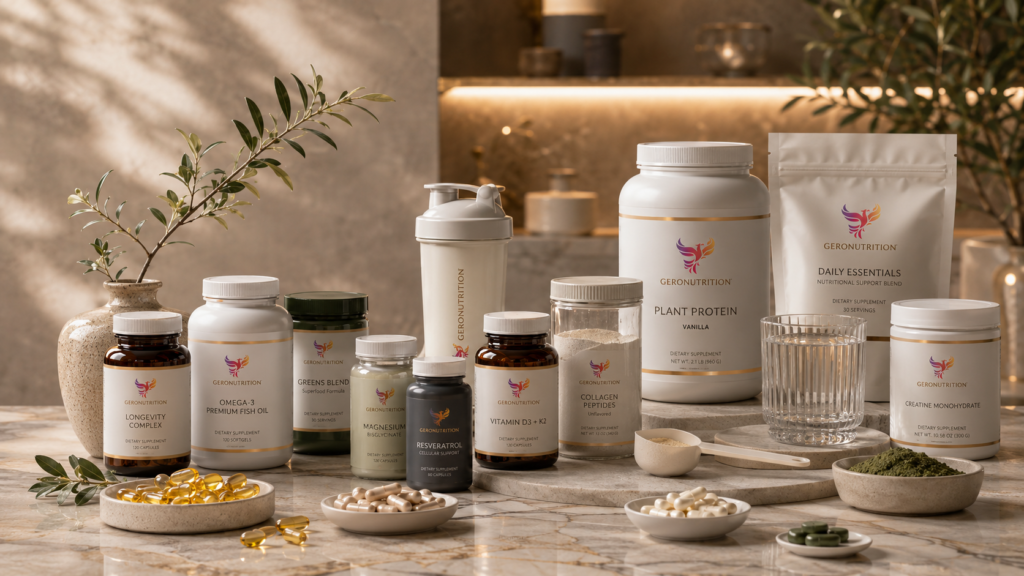
Wellness supplements are among the most searched health and wellness products because they are accessible, repeatable and easy to add to a daily routine. They are also among the easiest categories to misunderstand.
A supplement is not a shortcut around food, sleep, movement or medical care. It is a tool. Sometimes that tool fills a real gap. Sometimes it adds convenience. Sometimes it is mostly marketing. The difference depends on the person, the nutrient, the dose, the form, the testing quality and the reason for use.
The strongest supplement decisions usually begin with three questions:
- What is the intended benefit?
- Is there a plausible gap or need?
- Is the product tested, dosed clearly and easy to use consistently?
Essential Vitamin and Mineral Pages
A person building a basic routine often begins with core vitamins and minerals. These are not glamorous, but they are often more practical than exotic formulas.
| Page | Best For | What to Compare |
|---|---|---|
| Best Multivitamins | Broad daily nutrient coverage | Nutrient forms, dose balance, iron/no-iron options, testing |
| Best Vitamin D Supplements | Low sun exposure and bone/immune support routines | D3 vs D2, dose, oil-based softgels, testing |
| Best Vitamin B12 Supplements | Plant-forward diets, older adults and low B12 risk | Methylcobalamin vs cyanocobalamin, dosage, format |
| Best Calcium Supplements | Bone-support routines | Calcium citrate vs carbonate, vitamin D pairing, dose size |
| Best Magnesium Supplements | Sleep, muscle, stress and general mineral support | Glycinate, citrate, malate, oxide, tolerance |
A multivitamin can be useful when diet is inconsistent, but it should not be judged by the length of the label alone. More ingredients do not automatically mean better value. For many people, a clean multivitamin with sensible doses is more useful than a mega-dose formula that overlaps with other supplements.
Vitamin D is often treated as a basic wellness supplement, but dose matters. More is not always better. The same is true for calcium, magnesium and B12. A strong supplement routine respects both benefit and ceiling.
If your main goal is internal support, daily nutrition, muscle maintenance, hydration, gut health or healthy aging, start with the Supplements, Vitamins & Nutrition section before comparing individual products like multivitamins, vitamin D, magnesium, probiotics, protein powder, creatine or omega-3.
Omega-3, Fish Oil and Cardiometabolic Support
Omega-3 supplements remain popular because many people do not eat fatty fish regularly. The confusing part is language. “Fish oil” and “omega-3” are often used as if they are identical, but shoppers should pay attention to EPA and DHA content, not just total oil amount.
| Page | Best For | Key Decision |
|---|---|---|
| Best Fish Oil Supplements | People looking for fish-derived EPA/DHA support | EPA/DHA amount, freshness, burp control, testing |
| Best Omega-3 Supplements | Fish oil, algae oil or broader omega-3 comparison | Source, potency, sustainability and form |
Fish oil can be a strong category, but it is not a “grab any bottle” product. The label should make the meaningful dose easy to understand. If a product hides behind “1000 mg fish oil” while offering a much smaller EPA/DHA amount, it may not be the strongest value.
Gut Health, Fiber and Daily Digestion Support
Gut health products are a major part of wellness products because digestion affects comfort, routine, food tolerance and daily quality of life. But this category is full of vague claims.
A probiotic is not the same as a prebiotic. Fiber is not the same as greens powder. A greens powder is not a replacement for vegetables. Each product type has a different job.
| Page | Best For | What to Look For |
|---|---|---|
| Best Probiotic Supplements | People comparing live microorganism products | Strain information, CFU, storage, tolerance |
| Best Prebiotic Supplements | Feeding beneficial gut bacteria | Fiber type, tolerance, gradual dosing |
| Best Fiber Supplements | Regularity and fiber-gap support | Soluble vs insoluble fiber, texture, bloating risk |
| Best Greens Powder | Convenience and plant-compound coverage | Ingredient transparency, sugar, testing, realistic claims |
A person with low fiber intake may get more from a simple fiber supplement than an expensive greens formula. Someone with specific digestive sensitivity may need a gentler prebiotic rather than a high-CFU probiotic. Gut wellness works best when products are introduced slowly and judged by tolerance, not hype.
Protein, Collagen, Creatine and Performance Nutrition
Protein powders, collagen and creatine sit at the intersection of sports nutrition, healthy aging and daily wellness. These are among the best products for health and wellness when they solve a real routine gap.
| Page | Best For | What to Compare |
|---|---|---|
| Best Protein Powder | Muscle support, meal convenience and active lifestyles | Protein source, grams per serving, sugar, texture |
| Best Collagen Supplements | Skin, hair, nail and connective-tissue support routines | Peptide type, serving size, flavor, testing |
| Best Creatine Supplements | Strength, power, training and muscle-support routines | Creatine monohydrate, purity, dose, mixability |
| Best Electrolyte Powder | Hydration, sweating, heat and endurance support | Sodium level, sugar, magnesium/potassium, taste |
Protein powder is often more practical than fashionable. If a person consistently falls short on protein, a high-quality powder can help close the gap. Creatine is similarly direct: it has a clear use case for strength and repeated high-intensity effort. Collagen has a different profile; it should not be confused with complete protein for muscle building.
Electrolyte powders are useful when sweat loss is real, but many daily users do not need heavy electrolyte dosing. The best formula depends on activity, climate, diet and hydration habits.
Sleep, Stress and Longevity Supplements
This category is powerful but delicate. Sleep and stress products are easy to overuse because they promise relief from complex problems. Longevity supplements are often even more complicated because the marketing moves faster than practical evidence.
| Page | Best For | Use With Care |
|---|---|---|
| Best Melatonin Supplements | Occasional sleep timing support | Dose size, next-day grogginess, habit dependence |
| Best Ashwagandha Supplements | Stress-support routines | Medication interactions, thyroid considerations, tolerance |
| Best Turmeric Supplements | Inflammation-support routines | Curcumin form, absorption, blood-thinner concerns |
| Best CoQ10 Supplements | Energy metabolism and healthy aging routines | Ubiquinol vs ubiquinone, dose, capsule quality |
| Best NAD Supplements | Longevity-focused routines | Ingredient type, realistic expectations, cost |
| Best Longevity Supplements | Healthy aging supplement stacks | Evidence level, safety, overlap, personalization |
Melatonin should not be treated as a nightly sedative by default. It is better understood as a timing tool. Ashwagandha may suit some stress-support routines, but it is not a universal calming supplement. Turmeric, CoQ10 and NAD-focused products require careful comparison because ingredient form and dosing can change the value dramatically.
A serious longevity supplement approach starts with the basics: protein, movement, sleep, resistance training, sunlight habits, oral health, cardiometabolic health, and only then advanced supplementation.
Supplement Science and Comparison Guides
The supplement guide pages help people understand what they are actually comparing before choosing a product.
| Guide | Why It Matters |
|---|---|
| How to Choose Supplements | Builds a practical supplement selection checklist |
| Third-Party Tested Supplements | Explains quality signals beyond marketing claims |
| USP vs NSF Certified Supplements | Compares major supplement verification systems |
| Vitamin D3 vs D2 | Helps compare common vitamin D forms |
| Magnesium Glycinate vs Citrate | Explains why magnesium form matters |
| Fish Oil vs Omega-3 | Clarifies label confusion |
| Probiotics vs Prebiotics | Separates two different gut-health tools |
| Collagen Peptides vs Collagen | Explains supplement form and usability |
| Creatine Monohydrate vs HCL | Compares popular creatine types |
| Protein Powder vs Collagen | Helps people avoid using collagen as a complete protein replacement |
| Greens Powder vs Multivitamin | Compares plant blends with vitamin-mineral formulas |
| Melatonin vs Magnesium | Compares sleep timing support with mineral support |
| Ashwagandha vs Magnesium | Compares stress-support approaches |
| Turmeric vs Curcumin | Explains whole herb vs active compound framing |
| CoQ10 vs NAD | Compares two healthy-aging supplement categories |
| Longevity Supplements Guide | Builds a more strategic healthy-aging supplement approach |
Recovery, Pain Relief and Body Care Products
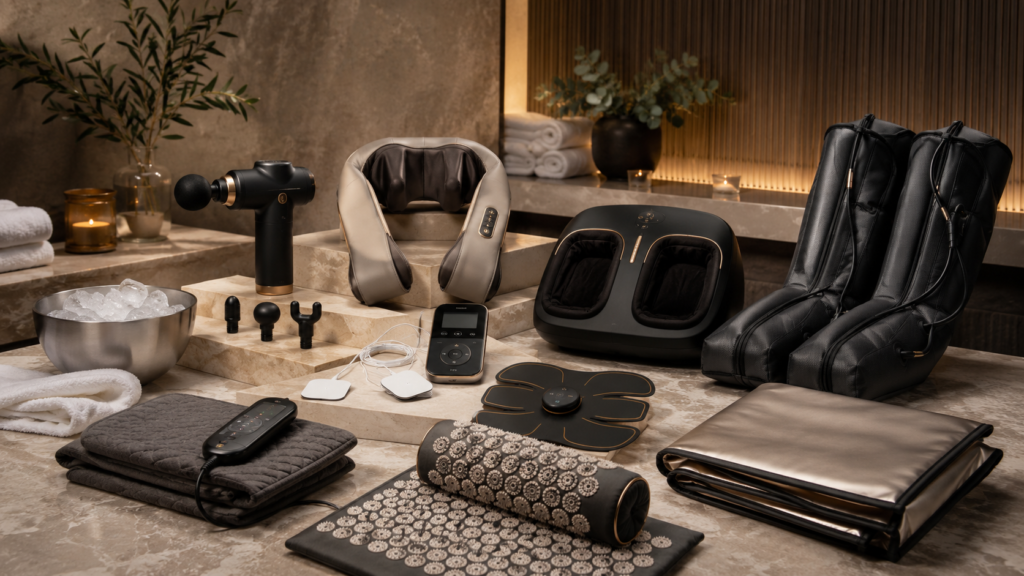
Recovery products are among the most practical wellness gadgets because their benefits are immediate and experience-based. A person can usually tell whether heat, compression, massage or cold exposure fits their routine.
The key is matching the tool to the type of discomfort.
For soreness, stiffness, post-workout recovery, desk tension, heat therapy, cold exposure or body-care tools, the Recovery, Pain Relief & Body Care section helps compare massage guns, heating pads, TENS units, compression boots, sauna blankets and cold plunge products by real use case.
Massage and Muscle Relief Products
| Page | Best For | What to Compare |
|---|---|---|
| Best Massage Gun | Sore muscles, warmups and post-workout recovery | Stall force, attachments, noise, weight |
| Best Neck Massager | Neck tension and desk-related stiffness | Heat, kneading style, fit, portability |
| Best Foot Massager | Foot fatigue and standing-heavy routines | Compression, rollers, heat, size |
| Best Acupressure Mat | Relaxation routines and tension release | Spike density, mat size, pillow support |
Massage tools work best when they encourage consistency. A bulky device with impressive specs may stay in a drawer. A lighter massage gun or easy-to-use neck massager may become part of the routine.
Heat, Electrical Stimulation and Compression
| Page | Best For | Strong Use Case |
|---|---|---|
| Best Heating Pad | General heat therapy | Back, shoulders, abdomen, mild muscle tension |
| Best Electric Heating Pad | Adjustable heat and repeat use | Consistent home use with auto-shutoff |
| Best TENS Unit | Nerve-style pain modulation support | Pad placement, intensity range, portability |
| Best Muscle Stimulator | Muscle activation and stimulation routines | Programs, electrodes, intensity control |
| Best Compression Boots | Leg recovery after training or standing | Pressure zones, fit, portability, cycle programs |
Heating pads are often underrated because they are simple. For many people, heat is more useful than a complicated device. TENS units and muscle stimulators require more care because placement, intensity and personal tolerance matter. Compression boots suit people who train often, stand long hours or enjoy structured recovery sessions.
Heat Stress, Cold Exposure and Recovery Rituals
| Page | Best For | What to Think About |
|---|---|---|
| Best Sauna Blanket | At-home heat sessions | Temperature range, cleanability, comfort |
| Best Cold Plunge Tub | Cold exposure routines | Cooling system, insulation, maintenance |
| Best Ice Bath Tub | Simpler cold immersion setup | Size, drainage, portability, ice use |
Heat and cold products should be approached with respect. They can be powerful experiences, but not every person should start with intense exposure. Recovery should make the body more resilient, not turn wellness into punishment.
Recovery and Pain Relief Guides
| Guide | What It Helps You Decide |
|---|---|
| How Massage Guns Work | Explains percussion therapy in practical terms |
| Massage Gun vs TENS Unit | Compares mechanical massage with electrical stimulation |
| TENS Unit vs Muscle Stimulator | Clarifies two often-confused device categories |
| Heat Therapy vs Cold Therapy | Helps match temperature therapy to the situation |
| Sauna Blanket Benefits | Explains home sauna blanket use cases |
| Cold Plunge Benefits | Gives context before investing in a cold plunge |
| Compression Boots Benefits | Explains pneumatic compression for recovery routines |
| How to Use a Massage Gun | Covers safer, more effective technique |
| Recovery Gadgets for Sore Muscles | Compares the main recovery tools for daily soreness |
Air, Water and Home Wellness Products
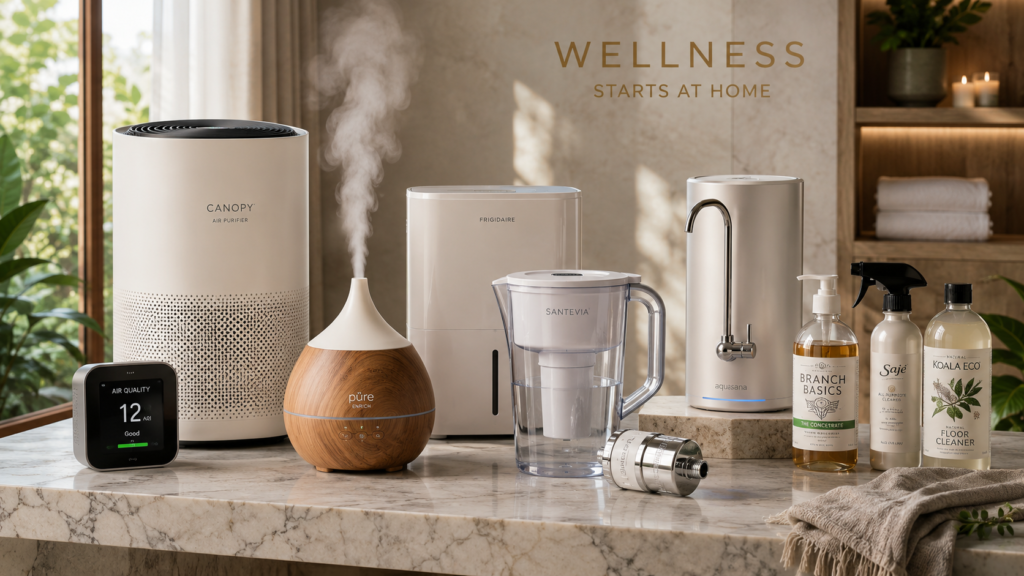
Home wellness products are different from personal gadgets because they change the environment around the body. They do not require the same daily motivation as a supplement or skincare device. If the problem begins in the room around you, the Air, Water & Home Wellness section is the better starting point for air purifiers, air quality monitors, humidifiers, dehumidifiers, water filters, shower filters, mold test kits and non-toxic home products.
This category is especially important because people often underestimate the health impact of the spaces they live and sleep in. A bedroom with dusty air, dry air, damp corners or poor ventilation can affect comfort more than another capsule in the supplement drawer.
Air Quality Products
| Page | Best For | What to Compare |
|---|---|---|
| Best Air Purifier | General indoor air cleaning | CADR, filter type, room size, noise |
| Best Air Purifier for Allergies | Pollen, dust, pet dander and allergy-prone rooms | HEPA filtration, sealed design, coverage |
| Best Air Purifier for Bedroom | Sleep spaces | Quiet operation, dim lights, night mode |
| Best Air Quality Monitor | People who want measurable indoor air signals | PM2.5, VOC, CO2, humidity, app quality |
Air purifiers are best chosen by room size and noise tolerance, not by design alone. A beautiful purifier that is too weak for the room may underperform. A strong purifier that is too loud may be turned off. The best product is the one that can run consistently in the right space.
Humidity, Moisture and Mold Awareness
| Page | Best For | What to Compare |
|---|---|---|
| Best Humidifier | Dry rooms, winter air and comfort | Tank size, cleaning ease, mist control |
| Best Dehumidifier | Damp spaces and moisture control | Pint capacity, drainage, humidity setting |
| Best Mold Test Kit | Checking suspected mold issues | Test type, lab support, interpretation |
Humidity is a balancing act. Too dry can irritate. Too damp can encourage problems. A smart home wellness approach may include both a humidifier and a dehumidifier depending on climate, room and season.
Water, Shower and Non-Toxic Home Products
| Page | Best For | What to Compare |
|---|---|---|
| Best Water Filter Pitcher | Simple drinking water filtration | Filter life, contaminant claims, speed |
| Best Countertop Water Filter | Higher-capacity home filtration | Setup, filtration method, maintenance |
| Best Shower Filter | Hair and skin comfort routines | Filter media, replacement cost, pressure |
| Best Non-Toxic Home Products | Lower-irritant home swaps | Ingredient transparency, fragrance, use case |
Water and home wellness products should be judged by maintenance. A filter that is never replaced becomes less useful. A humidifier that is hard to clean becomes a problem. A dehumidifier that is difficult to drain becomes annoying. Practicality is part of performance.
Oral Care and Hygiene Technology
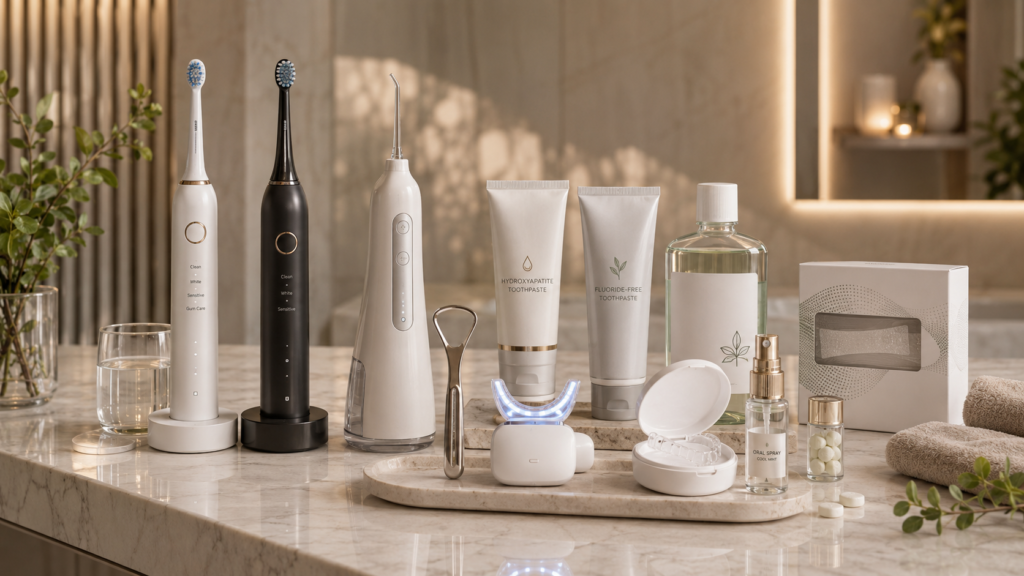
Oral care is one of the most overlooked parts of health and wellness products. People often treat it as cosmetic, but oral hygiene is a daily biological routine involving enamel, gums, breath, plaque control, tongue coating, interdental cleaning and product tolerance.
The best oral care technology does not need to be complicated. It needs to improve what happens every morning and every night.
For daily hygiene, breath, enamel care, whitening, gum-line cleaning and interdental routines, the Oral Care & Hygiene Tech section organizes electric toothbrushes, sonic toothbrushes, water flossers, tongue scrapers, mouthwash, toothpaste and whitening products into a practical decision path.
Toothbrushes, Flossing and Tongue Cleaning
| Page | Best For | What to Compare |
|---|---|---|
| Best Electric Toothbrush | Better brushing consistency | Timer, pressure sensor, brush head cost |
| Best Sonic Toothbrush | High-frequency brushing feel | Modes, intensity, head shape, battery |
| Best Water Flosser | Interdental cleaning support | Pressure settings, tank size, tip types |
| Best Tongue Scraper | Tongue coating and breath routines | Material, shape, comfort, cleaning ease |
Electric toothbrushes win when they reduce brushing errors. Pressure sensors and timers matter more than flashy modes for many people. Water flossers are especially useful for people who dislike string floss, have braces, bridges, implants or larger spaces between teeth, but technique still matters.
Tongue scrapers are simple but effective routine tools. They should be comfortable, easy to clean and used gently.
Toothpaste, Whitening and Breath Products
| Page | Best For | What to Compare |
|---|---|---|
| Best Hydroxyapatite Toothpaste | Enamel-focused fluoride-free or fluoride-alternative routines | Nano-hydroxyapatite, texture, sensitivity support |
| Best Fluoride-Free Toothpaste | People avoiding fluoride by preference | Active ingredients, abrasiveness, flavor |
| Best Teeth Whitening Kit | Structured whitening routines | Whitening agent, tray fit, sensitivity |
| Best Whitening Strips | Convenient whitening | Wear time, grip, peroxide strength |
| Best Mouthwash | Breath, gum and routine support | Alcohol-free options, actives, sensitivity |
| Best Bad Breath Products | Breath management routines | Tongue, saliva, oral hygiene and ingredients |
Whitening is not the same as oral health. A bright smile can still have plaque issues. A strong oral care routine begins with brushing, interdental cleaning and tongue care. Whitening products should be layered onto that foundation, not used as a mask for poor hygiene.
Oral Care Technology Guides
| Guide | What It Explains |
|---|---|
| Oral Care Technology Guide | How modern oral care tools fit into a daily routine |
| Electric Toothbrush vs Manual | Compares brushing technology and technique |
| Sonic Toothbrush vs Oscillating Toothbrush | Explains two major electric toothbrush styles |
| Water Flosser vs String Floss | Helps choose interdental cleaning tools |
| Benefits of Hydroxyapatite Toothpaste | Explains why hydroxyapatite is popular in enamel care |
| Hydroxyapatite vs Fluoride | Compares two enamel-support approaches |
| How Teeth Whitening Kits Work | Explains whitening mechanisms and expectations |
| Whitening Strips vs LED Whitening | Compares convenience and device-based whitening |
| Tongue Scraper Benefits | Explains why tongue cleaning matters |
Beauty, Skin and Longevity Devices
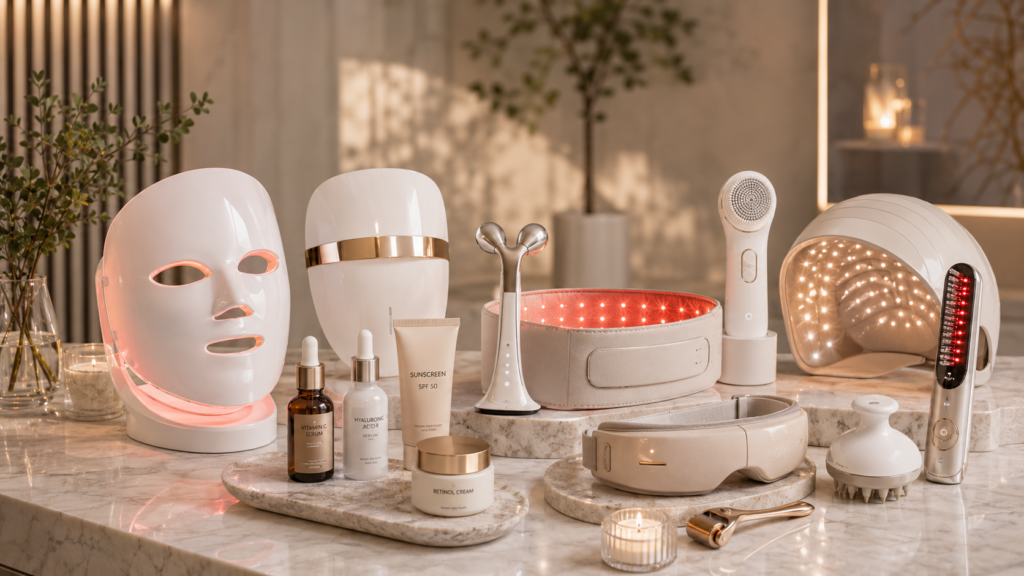
Beauty and skin wellness products are now blending cosmetic routines with home technology. The strongest products in this category do not promise overnight transformation. They support repeatable care: light exposure, cleansing, gentle stimulation, hair and scalp routines, sunscreen protection and active skincare ingredients.
A serious skin routine has hierarchy. Sunscreen comes before red light. Retinol and vitamin C should be introduced carefully. Devices should support consistency, not replace the basics.
For appearance-focused wellness, skin longevity, light therapy, facial devices, hair-support tools and active skincare, the Beauty, Skin & Longevity Devices section connects red light therapy devices, LED masks, microcurrent tools, retinol, vitamin C serum, hyaluronic acid and sunscreen into one clear buying framework.
Red Light, LED and Skin Technology
| Page | Best For | What to Compare |
|---|---|---|
| Best Red Light Therapy Device | General red light routines | Wavelengths, coverage area, irradiance, safety |
| Best Red Light Therapy Mask | Face-focused use | Fit, comfort, eye protection, session length |
| Best LED Face Mask | Multi-color light routines | Color modes, coverage, safety, consistency |
| Best Red Light Therapy Belt | Body-area targeting | Flexibility, coverage, warmth, controls |
| Best Microcurrent Device | Facial toning routines | Conductive gel, intensity, app guidance, comfort |
Skin devices require patience. A person should judge whether they will actually complete the sessions. A red light mask that feels comfortable and quick may outperform a more powerful panel that rarely gets used.
Cleansing, Texture, Hair and Scalp Care
| Page | Best For | What to Compare |
|---|---|---|
| Best Facial Cleansing Brush | Cleansing support | Brush softness, vibration, hygiene, skin sensitivity |
| Best Derma Roller | Texture-focused routines | Needle length, hygiene, skin tolerance |
| Best Hair Growth Device | Hair wellness routines | Light type, coverage, consistency, comfort |
| Best Scalp Massager | Scalp comfort and cleansing routines | Silicone quality, grip, pressure, shower use |
| Best Eye Massager | Eye strain, relaxation and screen-heavy routines | Heat, compression, music, fit |
Some beauty tools can irritate if overused. Cleansing brushes should be gentle. Derma rollers require careful hygiene and realistic expectations. Hair growth devices need consistency over time. Eye massagers should feel soothing, not overly tight.
Active Skincare Products
| Page | Best For | What to Compare |
|---|---|---|
| Best Retinol Cream | Texture, aging and skin renewal routines | Strength, irritation potential, moisturizer pairing |
| Best Vitamin C Serum | Brightness and antioxidant routines | Form, packaging, stability, skin type |
| Best Hyaluronic Acid Serum | Hydration and plumping support | Molecular weights, texture, layering |
| Best Sunscreen | Daily skin protection | SPF, finish, skin type, wearability |
Sunscreen is the quiet cornerstone of skin longevity. A person can buy advanced devices and active serums, but without daily sun protection, the routine is incomplete. Retinol, vitamin C and hyaluronic acid can work well together when layered intelligently, but sensitive skin should move slowly.
Beauty, Skin and Longevity Guides
| Guide | What It Explains |
|---|---|
| How Red Light Therapy Works | Practical red light mechanisms and expectations |
| Red Light Therapy Mask vs Panel | Compares targeted face devices with broader panels |
| Red Light Therapy for Face | Covers face-focused use cases |
| Red Light Therapy for Hair Growth | Explains light-based hair wellness routines |
| LED Face Mask Colors Explained | Helps understand red, blue and other light modes |
| Microcurrent vs Red Light Therapy | Compares two popular skin device categories |
| Retinol vs Vitamin C | Explains two major active skincare ingredients |
| Retinol vs Bakuchiol | Compares classic retinoid routines with gentler alternatives |
| Hyaluronic Acid vs Retinol | Separates hydration from skin renewal |
| Collagen Supplements vs Collagen Cream | Compares ingestible and topical collagen positioning |
| Skincare Devices Buying Guide | Helps choose skin tools by goal and routine |
Wellness Gadgets vs Supplements
The question “wellness gadgets vs supplements” is not about which category is better. It is about which one solves the problem more directly.
Supplements work through intake. Gadgets work through action, environment or routine. Sometimes they complement each other. Sometimes one is clearly more useful than the other.
| Situation | Better First Choice | Why |
|---|---|---|
| Low protein intake | Protein powder | Directly fills a nutrition gap |
| Sore calves after long standing | Foot massager or compression boots | Targets the felt problem |
| Poor bedroom air | Air purifier | Improves the environment directly |
| Inconsistent brushing | Electric toothbrush | Improves daily technique |
| Low sun exposure | Vitamin D supplement | Addresses a common nutrient-support need |
| Dry indoor air | Humidifier | Changes room comfort |
| Mild muscle tightness | Heating pad or massage gun | Provides direct relief experience |
| Poor hydration during heat | Electrolyte powder | Replaces minerals lost through sweat |
| Skin aging routine | Sunscreen first, then retinol or device | Protects before enhancing |
| Gut regularity | Fiber supplement or food-first fiber | More foundational than trend formulas |
A simple rule helps:
If the problem is a nutrient gap, consider a supplement.
If the problem is a behavior gap, consider a routine product.
If the problem is an environment gap, consider a home wellness product.
If the problem is a recovery or comfort gap, consider a body-care device.
When Supplements Make More Sense
Wellness supplements make more sense when the desired support depends on nutrient intake or a specific compound. Examples include vitamin D, B12, magnesium, omega-3, protein, creatine, electrolytes and fiber.
Supplements are also convenient. They require little space and are easy to repeat. But they demand discipline around dose, ingredient quality and medical context. People taking medications, managing health conditions, pregnant individuals or older adults should be especially careful with supplements that affect sleep, blood thinning, blood sugar, hormones or blood pressure.
When Gadgets Make More Sense
Wellness gadgets make more sense when the issue is mechanical, environmental or behavioral. A water flosser improves a cleaning behavior. A humidifier changes the room. A massage gun delivers percussion. A TENS unit delivers electrical stimulation. An air purifier filters particles. A red light mask provides structured light exposure.
Gadgets can cost more upfront but may last longer. They also make wellness more visible. The product is not hidden in a capsule; it becomes a routine object.
When the Best Routine Uses Both
Some routines benefit from both categories.
A person focused on muscle support might use protein powder and creatine, while also using a massage gun after training. A person focused on sleep might improve bedroom air, use a humidifier in dry seasons and consider magnesium if appropriate. A person focused on skin wellness might use sunscreen and retinol while adding a red light therapy mask for a more advanced routine.
The best wellness products are not chosen in isolation. They are chosen as part of a system.
How to Choose Health and Wellness Products Without Wasting Money
The easiest way to waste money in wellness is to shop by trend instead of constraint. A constraint is the real-world friction stopping a routine from working.
A person who hates flossing needs an easier interdental habit. A person who wakes congested needs bedroom air support. A person who trains hard and recovers poorly may need sleep, protein and soreness management before advanced cold exposure. A person with low daily energy may need basic nutrition, hydration, sleep schedule and movement before a longevity supplement stack.
Use this checklist before choosing health and wellness products.
The 7-Point Wellness Product Checklist
| Question | Why It Matters |
|---|---|
| What exact goal does this product support? | Prevents vague wellness spending |
| Is the product solving a real bottleneck? | Avoids unnecessary overlap |
| Does the mechanism make sense? | Separates useful tools from weak claims |
| Can I use it consistently? | Routine fit matters more than novelty |
| Is there a safety concern? | Supplements and devices can have risks |
| Is maintenance realistic? | Filters, brush heads, gels, pads and refills add cost |
| Is there a simpler first step? | Often the best starting product is not the most expensive |
Category-Specific Buying Signals
| Category | Strong Signals | Warning Signs |
|---|---|---|
| Supplements | Third-party testing, clear dose, transparent label | Proprietary blends, unrealistic claims, mega-doses |
| Air purifiers | Correct room coverage, HEPA-grade filtration, quiet mode | Vague filtration claims, tiny unit for large room |
| Water filters | Clear contaminant claims, reasonable filter cost | Expensive cartridges with unclear performance |
| Massage tools | Comfortable weight, usable attachments, low noise | Too heavy, harsh intensity, poor battery |
| TENS units | Clear instructions, adjustable intensity, pad quality | Confusing controls, weak electrode quality |
| Electric toothbrushes | Pressure sensor, timer, affordable heads | Too many modes, expensive replacements |
| Red light devices | Clear wavelength information, safety guidance | Overstated anti-aging claims |
| Skincare actives | Stable packaging, skin-type match, gradual use | Harsh formulas, irritation ignored |
| Whitening products | Clear wear time, sensitivity guidance | Aggressive claims, poor fit |
| Humidifiers | Easy cleaning, tank size, quiet running | Hard-to-clean design |
Wellness Product Comparison Table
The table below compares major wellness products by purpose, expected effort, cost style and decision difficulty.
| Product Type | Main Purpose | Effort Level | Cost Pattern | Decision Difficulty | Best First Question |
|---|---|---|---|---|---|
| Multivitamin | Broad nutrient coverage | Low | Recurring | Medium | Do I need broad coverage or targeted support? |
| Vitamin D | Nutrient support | Low | Recurring | Low-medium | Is my sun exposure or lab status relevant? |
| Magnesium | Mineral support | Low | Recurring | Medium | Which form fits my goal and tolerance? |
| Protein powder | Protein intake | Medium | Recurring | Medium | Am I missing protein through food? |
| Creatine | Muscle and performance support | Low | Recurring | Low | Is it pure creatine monohydrate? |
| Probiotic | Gut support | Low | Recurring | High | Are strains and tolerance clear? |
| Massage gun | Muscle relief | Medium | One-time | Medium | Will I use it often enough? |
| Heating pad | Heat therapy | Low | One-time | Low | Does it fit the body area I need? |
| TENS unit | Pain-modulation support | Medium | One-time plus pads | High | Do I understand safe placement? |
| Compression boots | Leg recovery | Medium | High upfront | Medium-high | Is my recovery need frequent enough? |
| Air purifier | Indoor air support | Low | Device plus filters | Medium | Is it sized for my room? |
| Humidifier | Dry-air comfort | Medium | Device plus cleaning | Medium | Can I clean it consistently? |
| Water filter | Drinking water improvement | Low | Device plus filters | Medium | What contaminants am I targeting? |
| Electric toothbrush | Brushing consistency | Low | Device plus heads | Low | Does it improve technique? |
| Water flosser | Interdental cleaning | Medium | Device plus tips | Medium | Will I use it daily? |
| Red light mask | Skin-device routine | Medium | High upfront | High | Are specs and safety clear? |
| Sunscreen | Skin protection | Medium | Recurring | Low-medium | Will I wear it every day? |
Common Mistakes When Shopping for Wellness Products
Wellness shopping becomes expensive when people skip the boring questions.
Mistake 1: Buying the Most Advanced Product First
A premium cold plunge tub may look impressive, but a person who has not built a recovery routine may be better served by sleep consistency, protein intake, hydration and a heating pad. The advanced product should match an advanced habit.
Mistake 2: Confusing More Ingredients With Better Formulas
In supplements, long labels can feel powerful. But more ingredients can also mean underdosing, overlap, tolerance issues and unclear benefits. A simple, transparent formula often beats a crowded blend.
Mistake 3: Ignoring Replacement Costs
Filters, brush heads, whitening strips, electrode pads, conductive gels, supplement refills, probiotic subscriptions and skincare repurchases all matter. The real cost of a wellness product is not just the first purchase.
Mistake 4: Treating Gadgets as Discipline Replacements
A device can support a habit, but it cannot create a lifestyle alone. A red light mask does not replace sunscreen. A massage gun does not replace recovery. A water flosser does not replace brushing. An air purifier does not replace cleaning and ventilation.
Mistake 5: Ignoring Fit, Comfort and Friction
A product that is technically strong but annoying to use usually fails. Loud air purifiers get turned off. Heavy massage guns are skipped. Harsh retinol creams are abandoned. Complicated supplement stacks are forgotten.
Mistake 6: Chasing Every Wellness Trend at Once
The strongest routines are built in layers. Choose one category, use it properly, then add another only if it solves a real problem.
The Future of Health and Wellness Products
The next phase of wellness products will be less about isolated items and more about connected routines.
Several patterns are already visible:
Personalization Will Matter More
People are moving away from generic wellness stacks. A supplement routine for an endurance runner, a desk worker, an older adult, a person with dry indoor air and a person with sensitive skin should not look the same. The future belongs to better matching: goal, lifestyle, biology, environment and product type.
Home Wellness Will Become More Measurable
Air quality monitors, smart scales, sleep tools, connected toothbrushes, hydration reminders and app-based recovery devices are making wellness more measurable. Not every metric is useful, but better feedback can help people notice patterns.
Oral Care Will Become Part of Whole-Body Wellness
Oral care technology is moving beyond cosmetic whitening. Electric toothbrushes, water flossers, tongue scrapers, enamel-support toothpaste and oral microbiome awareness are turning the bathroom routine into a more serious wellness category.
Beauty Tech Will Keep Blending With Longevity
Red light therapy, LED masks, scalp devices, microcurrent tools, sunscreen, retinol, collagen and vitamin C are part of a broader skin longevity conversation. The key will be separating realistic support from exaggerated claims.
Recovery Will Move Into Everyday Life
Recovery products are no longer only for athletes. Desk workers, older adults, frequent travelers and people with physically demanding jobs are adopting massage tools, heat therapy, compression and cold exposure. The best recovery products will be the ones that fit normal life, not just elite routines.
Supplement Standards Will Become More Important
As wellness supplements grow, quality signals will matter more. Transparent labels, third-party testing, sensible dosing and ingredient form will separate serious products from trend-driven formulas.
Frequently Asked Questions
What are the best wellness products for daily health at home?
The best wellness products for daily health at home are the ones that improve repeatable routines: an electric toothbrush for better brushing, an air purifier for indoor air support, a water filter for drinking water convenience, sunscreen for daily skin protection, a protein powder if protein intake is low, magnesium or vitamin D when appropriate, and a simple recovery tool such as a heating pad or massage gun.
A strong home routine usually begins with basics before advanced devices. For example, bedroom air quality, hydration, oral hygiene, sleep timing and protein intake often matter more than expensive wellness gadgets. Once those are stable, products like red light therapy masks, compression boots, cold plunge tubs and advanced supplement stacks may become more reasonable.
Which wellness supplements should most adults consider first?
The most practical wellness supplements to consider first are usually the ones that address common dietary or lifestyle gaps: vitamin D, magnesium, vitamin B12, omega-3, protein powder, fiber and creatine. The right choice depends on diet, sun exposure, age, activity level, medications and health context.
A person who rarely eats fish may compare omega-3 supplements. Someone who trains regularly may look at creatine and protein powder. Someone with low fiber intake may benefit more from fiber than a greens powder. Supplements should be chosen by need, not by trend. Anyone with medical conditions or medications should be careful and seek professional guidance when needed.
Are wellness gadgets vs supplements better for recovery and sleep?
For recovery, wellness gadgets often make more sense when the issue is soreness, stiffness, circulation comfort or muscle tension. Massage guns, heating pads, compression boots, TENS units and sauna blankets can provide direct physical support. Supplements may help when the issue is nutrition-related, such as low protein intake, poor hydration, electrolyte loss or insufficient magnesium.
For sleep, the answer is mixed. A humidifier, air purifier, eye massager or better bedroom setup can support the sleep environment. Magnesium or melatonin may help certain people, but they should not replace sleep timing, light exposure, caffeine control and evening routine. The best approach often combines environment, behavior and targeted supplementation.
How do I choose safe health and wellness products online?
Choose health and wellness products online by checking the product’s purpose, ingredients or specifications, safety warnings, testing signals, replacement costs and realistic use case. For supplements, look for clear dosing, third-party testing, transparent labels and no exaggerated medical claims. For gadgets, compare safety features, warranty, materials, maintenance requirements and whether the product suits your routine.
Avoid products that promise dramatic results with little effort. Be especially cautious with supplements that affect sleep, hormones, blood sugar, blood pressure or blood thinning. For devices, check whether the product has safe intensity controls, cleaning instructions and clear user guidance.
What wellness products are worth buying for work-from-home routines?
The most useful wellness products for work-from-home routines usually support posture, air, eyes, hydration, oral care and recovery. Good options include an air purifier for the workspace, a humidifier in dry rooms, a neck massager for tension, an eye massager for screen-heavy days, electrolyte powder if hydration is poor, a water filter pitcher for convenience, and an electric toothbrush or water flosser to strengthen daily hygiene habits.
A work-from-home wellness routine should reduce friction. Products that sit nearby and solve daily discomfort tend to be used more often than complicated devices stored away in another room.
People Also Ask
What is the difference between health and wellness products?
Health and wellness products overlap, but they are not identical. Health products usually aim at a specific physical need, such as nutrient support, oral hygiene, recovery, hydration, air quality or skin protection. Wellness products often include broader lifestyle tools that support comfort, routine, appearance, relaxation or daily performance.
A vitamin D supplement, electric toothbrush, air purifier and sunscreen can all be health and wellness products because they support practical daily care. A sauna blanket, LED face mask or eye massager may lean more toward wellness experience, but can still be useful when matched to the right goal.
Are wellness gadgets worth it for everyday routines?
Wellness gadgets are worth it when they solve a real problem and are easy enough to use consistently. An electric toothbrush is worth it for many people because it improves brushing structure. An air purifier is worth it for someone with dust, allergies or poor indoor air. A massage gun can be worth it for active people or those with recurring muscle tightness.
Wellness gadgets are less worth it when they are bought for novelty, status or vague improvement. A person should ask: will this product change my daily behavior, reduce friction, improve my environment or support recovery in a way I can actually repeat?
What are the best products for health and wellness in 2026?
The best products for health and wellness in 2026 are likely to be practical, measurable and routine-friendly. Strong categories include air purifiers, water filters, electric toothbrushes, water flossers, protein powder, creatine, magnesium, vitamin D, omega-3, sunscreen, red light therapy devices, massage guns, heating pads and smart recovery tools.
The strongest product is not always the newest one. In many cases, the best wellness product is the one that improves a daily routine with the least friction. A simple electric toothbrush used twice daily can be more valuable than a premium gadget used once a month.
Do wellness supplements actually work?
Some wellness supplements can be useful when they address a real need, are properly dosed and are taken consistently. Examples include protein powder for low protein intake, creatine for strength routines, vitamin D for people with low levels or low sun exposure, B12 for people at risk of low intake, and fiber for people who do not eat enough fiber.
Other supplements are more uncertain or highly dependent on the person. The most common mistake is expecting a supplement to solve a lifestyle problem by itself. Supplements work best as targeted support, not as replacements for sleep, food quality, movement, sunlight, hydration and medical care.
Which wellness products should I avoid?
Avoid wellness products that make extreme promises, hide ingredient amounts, use vague proprietary blends, ignore safety warnings or require a routine you know you will not follow. Also be careful with products that create high recurring costs without clear value.
For supplements, avoid unclear dosing, excessive mega-dose formulas and products that promise disease treatment without proper medical context. For gadgets, avoid devices with weak safety information, poor cleaning design, unrealistic claims or no clear reason to fit your life.
Editorial Insights
The wellness products that matter most are rarely chosen by excitement alone. They are chosen by friction.
What makes the morning easier? What makes the bedroom cleaner? What improves the brushing routine? What helps a person recover after training? What supports a real nutrient gap? What improves skin protection? What makes hydration more consistent? What turns a vague wellness intention into a repeatable behavior?
That is the difference between random wellness shopping and a useful personal care system.
The smartest way to use this wellness center is to begin with the area that affects your daily life most. If your home air is poor, start with air and room wellness. If your oral routine is weak, start with brushing, flossing and tongue care. If your nutrition is inconsistent, compare foundational wellness supplements. If your body feels sore or tense, explore recovery tools. If your skin routine is unstructured, begin with sunscreen and active skincare before advanced devices.
Schopping’s health and wellness pages are designed to help you compare categories clearly, avoid unnecessary purchases and build a routine that works in real life. For broader product research across categories, return to Schopping and continue exploring smarter shopping guides.