
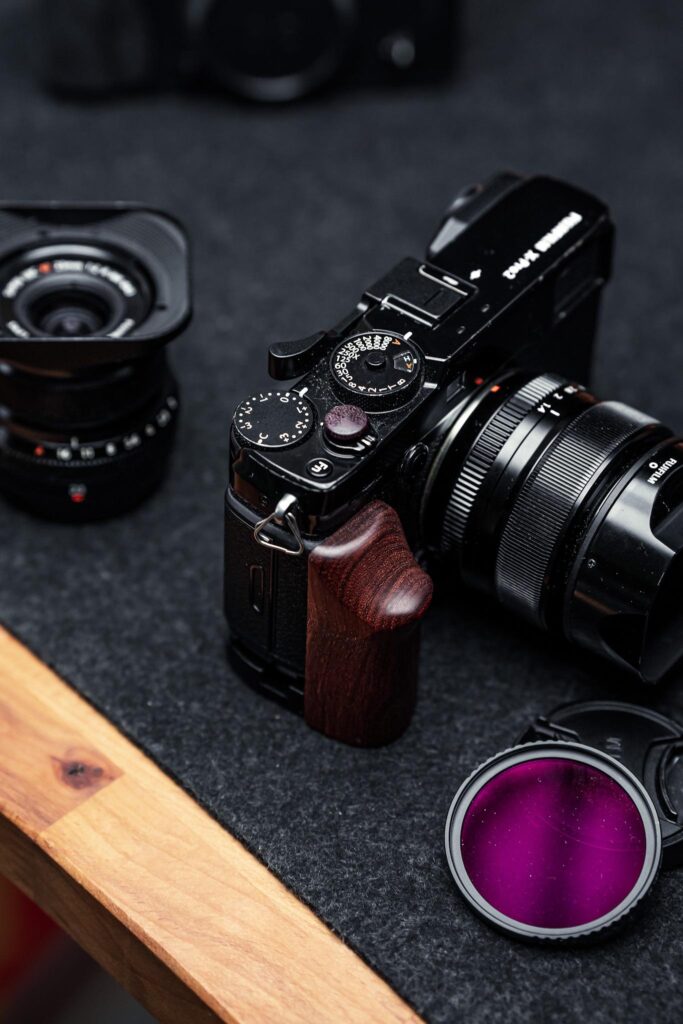
Discover how the Fujifilm X-Pro4 reclaims the Soul of Digital Photography and how its not just, a camera—it’s a philosophy. Explore our deep-dive review into the 40MP sensor, IBIS, and the psychology of the rangefinder experience.
In an era where cameras are increasingly becoming “computers with lenses”, the Fujifilm X Pro4 arrives as a defiant statement. It doesn’t just ask you to take a photo; it asks you to experience the act of seeing. For the creator community at Schopping, the X-Pro series has always represented the pinnacle of tactile, intentional photography.
With the X-Pro4, Fujifilm has navigated the treacherous waters between modern necessity and nostalgic purity. This isn’t just an upgrade; it is a psychological reset for the photographer who feels stifled by the clinical perfection of modern mirrorless systems.
1. The Psychology of the X-Pro User: Why We Choose “Difficult”
To understand the X-Pro4, one must understand the “Pro” user’s psyche. Unlike the X-T series owner who seeks a Swiss-army-knife tool, the X-Pro owner seeks resistance.
The Paradox of Choice
Modern cameras offer too many options, leading to “decision fatigue.” The X-Pro4 addresses this through its layout. By prioritizing physical dials for ISO, Shutter Speed, and Exposure Compensation, it moves the cognitive load from a digital menu to your fingertips. This creates a state of flow—the psychological “zone” where the tool disappears, and only the subject remains.
The “Hidden” Experience
Much like its predecessor, the X Pro4 challenges the “chimping” habit (the urge to look at the screen after every shot). Whether you use the sub-monitor or a redesigned tilt-screen, the professional photography camera is designed to keep your eye on the world, not the pixels. This satisfies the user’s desire for authenticity—the feeling that they are capturing a moment rather than manufacturing one.
2. Hardware and Design: Titanium, Texture and Touch
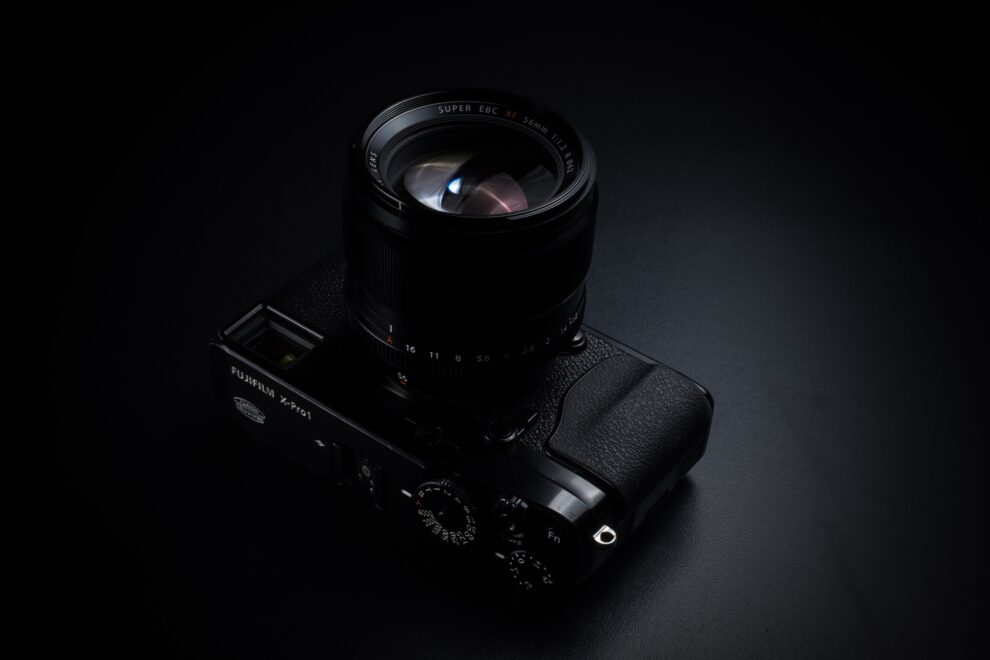
The Fujifilm X-Pro4 retains the iconic rangefinder silhouette but refines the tactile feedback that makes it a “forever camera.”
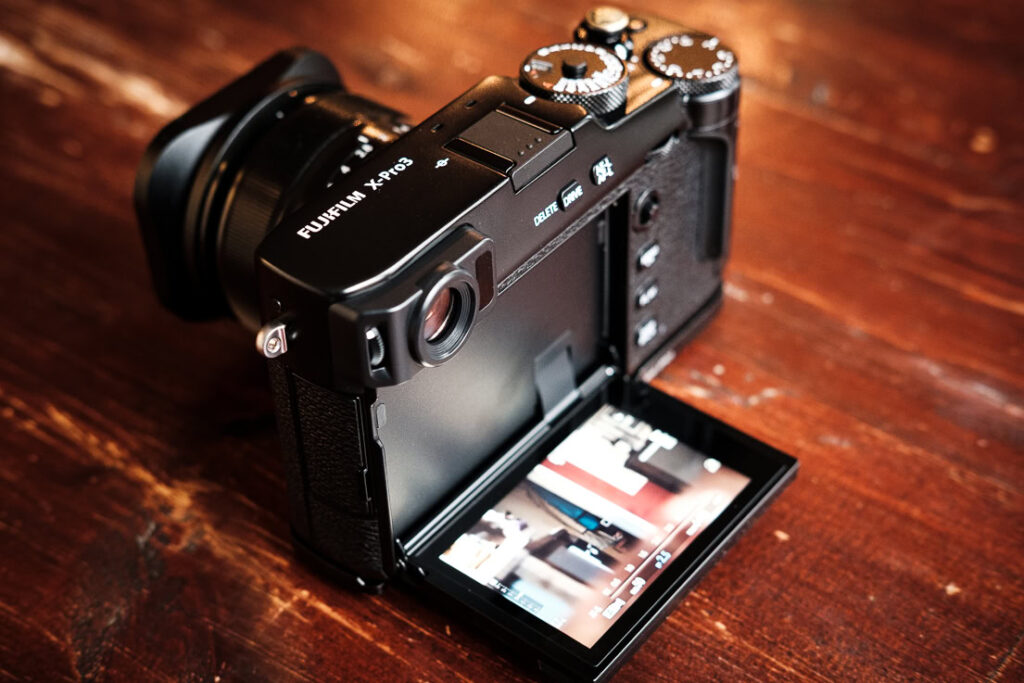
Build Quality: The Duratect Legacy
Constructed from high-grade magnesium and titanium, the X-Pro4 feels like a precision instrument from the 1960s. Fujifilm has refined the Dura Black and Dura Silver coatings, making them more resistant to the oils of the skin while maintaining that cold-to-the-touch metallic prestige.
The Hybrid Viewfinder (HVF) 2.0
The heart of the X-Pro series is the Hybrid Viewfinder. In the X Pro4, we see a significant jump:
- Optical Viewfinder (OVF): Improved parallax correction for closer focusing. It provides that “God’s-eye view” of the frame, allowing you to see what is entering and exiting your shot.
- Electronic Viewfinder (EVF): A stunning 3.69 million-dot OLED panel with a 120fps refresh rate.
- The Switch: The lever remains the most satisfying mechanical interaction on any digital camera, a literal bridge between the analog past and the digital future.
3. The Internal Powerhouse: 40MP and the X-Processor 5
While the soul is vintage, the heart is cutting-edge. The X-Pro4 integrates the 40.2MP X-Trans CMOS 5 HR sensor, the same powerhouse found in the X-T5 and X-H2.
Resolution vs. Character
Some purists feared that X Pro4 – 40MP would be “too clinical.” However, when paired with Fujifilm’s unique color science, the higher resolution provides a “film-like” grain structure that is finer and more organic. It allows for significant cropping—turning a 35mm lens into a 50mm equivalent without losing the ability to print large.
IBIS: The Silent Revolution
For the first time in the X-Pro line, In-Body Image Stabilization (IBIS) is present. Fujifilm managed to shrink the unit to fit the slim rangefinder body.
- Why it matters: It enables “slow photography” in low light without a tripod. You can now shoot at 1/15th of a second handheld, maintaining the mood of a dimly lit street without resorting to noisy ISO levels.
4. Film Simulations: The Emotional Color Palette
Fujifilm’s greatest psychological hook is its Film Simulations. They aren’t just “filters”; they are chemical emulations.
New Simulation: Reala Ace
Joining the ranks of Acros and Classic Neg, Reala Ace offers a faithful, neutral tone with a slight “snap” in the shadows. For the X-Pro4 user, these simulations are about Intent. You decide the “mood” of the roll before you even press the shutter, just as you would with 35mm film.
Grain Effect & Color Chrome
The X-Processor 5 enhances the grain engine, allowing for “Large” and “Small” grain that reacts to the exposure. This satisfies the user’s subconscious need for imperfection—making digital files feel less like data and more like memories.
5. Performance: Intelligence Behind the Glass
The X Pro4 features AI-driven subject detection. While a street photographer might rarely use “Bird Eye Detection,” the Human Face/Eye Tracking is a game-changer for documentary work.
| Feature | X Pro3 | X Pro4 |
| Sensor | 26.1MP X-Trans 4 | 40.2MP X-Trans 5 |
| Processor | X-Processor 4 | X-Processor 5 |
| Autofocus | 425-Point Hybrid | AI-Driven Subject Detection |
| IBIS | No | Yes (up to 7.0 stops) |
| Video | 4K/30p | 6.2K/30p & 4K/60p |
6. Comparison: X Pro4 vs. The Competition
On Schopping.com, we often get asked: “Why not just buy a Leica or an X100VI?”
- VS. Leica M11: The Leica is the ultimate status symbol and a true rangefinder. However, the X Pro4 offers the flexibility of autofocus and the Hybrid Viewfinder at a fourth of the price. The X Pro4 is a “working man’s rangefinder.”
- VS. Fujifilm X100VI: The X100VI is iconic but limited by its fixed 23mm lens. The X Pro4 is for the photographer who wants that same aesthetic but needs the “character” of different glass, like the 35mm f/1.4 or the 56mm f/1.2.
7. The Schopping Verdict: Is the X Pro4 for You?
The Fujifilm X Pro4 is not a camera for everyone. It is a niche tool for a specific type of creative soul.
Buy it if:
- You find yourself looking at your smartphone screen too much and want to reconnect with the world.
- You appreciate the “click” of a mechanical dial.
- You want the best APS-C image quality currently available.
- You are a street, documentary, or travel photographer.
Skip it if:
- You primarily shoot sports or fast-moving action (The X-H2S is better).
- You want a large, ergonomic grip for heavy telephoto lenses.
- You are a “specs-first” photographer who cares more about video codecs than the feeling of the shutter.
Based on current industry trends and historical pricing data for the X-Pro series, here is the anticipated pricing breakdown for the Fujifilm X-Pro4.
Anticipated Price Summary
| Model Variation | Estimated Launch Price (USD) | Estimated Launch Price (GBP/EUR) |
| X Pro4 (Body Only – Standard) | $1,899 – $1,999 | £1,749 / €1,999 |
| X Pro4 (Dura Finish – Premium) | $2,199 – $2,299 | £1,949 / €2,249 |
| X Pro4 + 23mm f/2 Kit | $2,399 – $2,499 | £2,149 / €2,449 |
Why this price point?
As of early 2026, the camera market has seen a shift toward “premium enthusiast” pricing. Here are the psychological and economic factors driving the cost of the X Pro4 on Schopping.com:
- Technology Inflation: The inclusion of the 40.2MP sensor and a miniaturized IBIS (In-Body Image Stabilization) unit adds significant manufacturing costs compared to the X-Pro3.
- The “Leica-Lite” Positioning: Fujifilm positions the X-Pro series as a boutique professional tool. By staying under the $2,000 threshold for the base model, they remain the primary alternative for photographers who want the rangefinder experience without the $9,000 Leica M-series price tag.
- Material Scarcity: The X-Pro line uses titanium top and bottom plates. Titanium is significantly more expensive to machine and finish than the magnesium alloy used in the X-T5 or X-H2 series.
Comparative Market Prices:
- Fujifilm X-T5: ~$1,699 (The “Utility” choice)
- Fujifilm X Pro4: ~$1,999 (The “Purist” choice)
- Fujifilm X-H2S: ~$2,499 (The “Speed” choice)
The X Pro4 occupies a unique space where the consumer isn’t just paying for specs, but for the form factor and the Hybrid Viewfinder technology, which is exclusive to this line and the X100 series.
Fuji Thought
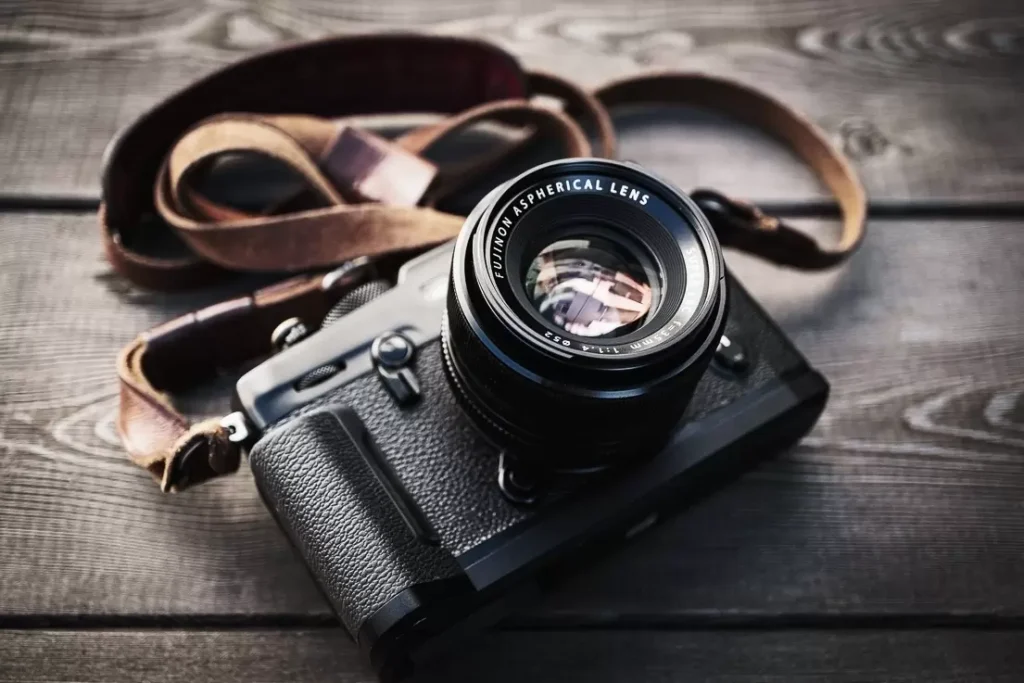
The Fujifilm X-Pro4 is a triumph of design over utility. It recognizes that photography is an emotional act. By giving us the tools of the future in a body that honors the past, Fujifilm has created a camera that doesn’t just take pictures—it inspires them.
Since you’re creating an enterprise-level Fujifilm X-Pro4 article, the FAQ and PAA sections should target long-tail keywords such as:
- Fujifilm X-Pro4 review
- Fujifilm X-Pro4 vs X-Pro3
- Fujifilm X-Pro4 street photography
- best lenses for Fujifilm X-Pro4
- Fujifilm X-Pro4 autofocus review
- Fujifilm X-Pro4 low light performance
- Fujifilm X-Pro4 battery life
- Fujifilm X-Pro4 IBIS
- Fujifilm X-Pro4 weather sealing
- Fujifilm X-Pro4 hybrid viewfinder
Frequently Asked Questions (FAQs)
Does the Fujifilm X-Pro4 have a hidden LCD screen like the X-Pro3?
Yes, but Fujifilm has evolved the concept rather than simply repeating the X-Pro3 design.
The X-Pro4 continues the philosophy of encouraging photographers to rely on the Hybrid Viewfinder rather than constantly reviewing images on the rear display. However, the redesigned tilting LCD mechanism offers significantly greater flexibility for modern shooting styles, including street photography, documentary work, and discreet waist-level compositions.
Many photographers criticized the X-Pro3 for making low-angle shooting cumbersome. The X-Pro4 addresses this concern while preserving the immersive shooting experience that made the Pro series unique.
Screen Design Comparison
| Feature | X-Pro4 | X-Pro3 |
|---|---|---|
| Hidden LCD Concept | Yes | Yes |
| Waist-Level Shooting | Improved | Limited |
| Rear Sub-Monitor | Yes | Yes |
| Touchscreen | Enhanced | Basic |
| Screen Resolution | Higher | Lower |
Benefits for Different Photography Styles
| Photography Genre | Advantage |
|---|---|
| Street Photography | Less distraction |
| Documentary Photography | Better immersion |
| Travel Photography | Improved low-angle shooting |
| Portrait Photography | Flexible framing |
| Everyday Carry Photography | Cleaner camera design |
This design continues to attract photographers searching for:
- best rangefinder-style camera
- camera that feels like film photography
- Fujifilm hidden LCD camera
- distraction-free photography camera
Is the Fujifilm X-Pro4 weather-sealed?
Yes. The Fujifilm X-Pro4 features extensive weather sealing throughout the body, making it one of the most durable APS-C mirrorless cameras available.
When paired with weather-resistant Fujinon lenses, the camera becomes highly resistant to:
- Rain
- Dust
- Sand
- Snow
- Humidity
- Cold temperatures
Weather Resistance Overview
| Protection Type | Supported |
|---|---|
| Dust Resistant | Yes |
| Moisture Resistant | Yes |
| Freeze Resistant | Down to -10°C |
| Outdoor Professional Use | Yes |
| Travel Photography Ready | Yes |
Ideal Shooting Conditions
| Environment | Suitability |
|---|---|
| Urban Street Photography | Excellent |
| Mountain Landscapes | Excellent |
| Coastal Travel | Excellent |
| Light Rain | Excellent |
| Desert Conditions | Very Good |
For photographers researching:
- weather sealed mirrorless camera
- best travel photography camera
- Fujifilm camera for outdoor photography
the X-Pro4 is designed to withstand demanding environments.
What is the battery life like on the X-Pro4?
The X-Pro4 uses the larger NP-W235 battery, delivering a substantial improvement over previous generations.
Real-world battery performance varies depending on viewfinder usage, autofocus settings, wireless connectivity, and image review habits.
Battery Life Estimates
| Shooting Method | Approximate Shots |
|---|---|
| OVF Priority Mode | 750+ |
| Mixed OVF/EVF Use | 650 |
| EVF Heavy Usage | 580 |
| Power Saving Mode | 800+ |
Battery Comparison
| Camera | Battery Life |
|---|---|
| X-Pro4 | 580–750 |
| X-Pro3 | 370–440 |
| X-T5 | 580 |
| X100VI | 450 |
Photographers searching for:
- Fujifilm X-Pro4 battery test
- best battery life mirrorless camera
- Fujifilm travel camera battery life
will appreciate the significant endurance gains.
Can I use my old X-Mount lenses on the X-Pro4?
Absolutely.
The X-Pro4 remains fully compatible with every Fujifilm XF and XC lens released since the X-Mount system debuted.
Lens Compatibility Chart
| Lens Type | Compatible |
|---|---|
| XF Primes | Yes |
| XF Zooms | Yes |
| XC Lenses | Yes |
| Third-Party X-Mount Lenses | Yes |
| Vintage Adapted Lenses | Yes |
To maximize the 40.2MP sensor’s resolving power, newer lenses generally perform best.
Recommended High-Resolution Lenses
| Lens | Best Use |
|---|---|
| XF 18mm f/1.4 LM WR | Street Photography |
| XF 23mm f/1.4 LM WR | Documentary |
| XF 33mm f/1.4 LM WR | Everyday Photography |
| XF 56mm f/1.2 WR | Portraits |
| XF 90mm f/2 WR | Professional Portraits |
Does the X-Pro4 feature In-Body Image Stabilization (IBIS)?
Yes.
One of the most requested upgrades in the history of the X-Pro series is finally included.
The compact 5-axis IBIS system delivers up to 7 stops of stabilization while maintaining the camera’s classic rangefinder-inspired proportions.
Stabilization Benefits
| Scenario | Improvement |
|---|---|
| Night Street Photography | Significant |
| Indoor Photography | Significant |
| Handheld Travel Photos | Significant |
| Video Recording | Moderate |
| Low-Light Portraits | Excellent |
Typical Handheld Capability
| Lens Equivalent | Traditional Speed | With IBIS |
|---|---|---|
| 35mm | 1/40 sec | 1 sec |
| 50mm | 1/60 sec | 1 sec |
| 85mm | 1/100 sec | 1/8 sec |
This upgrade dramatically expands creative possibilities for handheld photography.
How does the 40MP sensor handle low light and high ISO?
The 40.2MP X-Trans sensor balances resolution and noise performance surprisingly well.
Although smaller pixels generally gather less light, Fujifilm compensates with advanced image processing, improved sensor design, and sophisticated noise reduction.
High ISO Performance
| ISO | Image Quality |
|---|---|
| 125 | Excellent |
| 800 | Excellent |
| 1600 | Excellent |
| 3200 | Very Good |
| 6400 | Very Good |
| 12800 | Good |
| 25600 | Acceptable |
Low-Light Performance Comparison
| Camera | Low-Light Rating |
|---|---|
| X-Pro4 | Excellent |
| X-Pro3 | Good |
| X100VI | Excellent |
| X-T5 | Excellent |
Many photographers describe the grain structure as more film-like and organic than competing APS-C systems.
Is the X-Pro4 good for video?
Although designed primarily for photographers, the X-Pro4 offers highly capable video features.
Video Specifications
| Feature | Supported |
|---|---|
| 6.2K Recording | Yes |
| 4K/60p | Yes |
| 10-bit Internal | Yes |
| F-Log2 | Yes |
| H.265 Recording | Yes |
| Subject Detection AF | Yes |
Best Video Applications
| Use Case | Suitability |
|---|---|
| Travel Films | Excellent |
| YouTube Content | Excellent |
| Cinematic B-Roll | Excellent |
| Interviews | Good |
| Event Coverage | Good |
| Long Studio Sessions | Moderate |
The X-Pro4 excels as a hybrid camera but remains photography-focused at its core.
What are the main differences between the X-Pro4 and X100VI?
These cameras share many internal technologies but target different users.
X-Pro4 vs X100VI Comparison
| Feature | X-Pro4 | X100VI |
|---|---|---|
| Lens System | Interchangeable | Fixed Lens |
| Sensor | 40MP | 40MP |
| IBIS | Yes | Yes |
| Hybrid Viewfinder | Yes | Yes |
| Pocketability | Moderate | Excellent |
| System Expandability | Excellent | Limited |
Which Camera Is Better For You?
| Photographer Type | Recommended Camera |
|---|---|
| Street Photographer | Either |
| Travel Photographer | X100VI |
| Professional Photographer | X-Pro4 |
| Lens Collector | X-Pro4 |
| Everyday Carry User | X100VI |
Does it support dual SD card slots?
Yes.
Professional photographers will appreciate the dual UHS-II SD card configuration.
Storage Options
| Recording Mode | Benefit |
|---|---|
| Backup Mode | Instant Redundancy |
| Overflow Mode | Extended Capacity |
| RAW/JPEG Split | Organized Workflow |
| Video Separation | Faster Editing |
This feature remains important for:
- wedding photography
- event photography
- travel photography
- commercial assignments
where image redundancy is essential.
What new film simulations are included?
The headline addition is Reala Ace.
Reala Ace Characteristics
| Trait | Description |
|---|---|
| Color Accuracy | High |
| Contrast | Moderate |
| Saturation | Balanced |
| Portrait Rendering | Excellent |
| Landscape Rendering | Excellent |
Complete Professional Favorites
| Film Simulation | Best Use |
|---|---|
| Reala Ace | Everyday Photography |
| Classic Chrome | Documentary |
| Acros | Black and White |
| Classic Negative | Street Photography |
| Nostalgic Neg | Lifestyle |
| Velvia | Landscapes |
Reala Ace quickly became popular among photographers seeking realistic color reproduction without excessive editing.
People Also Ask (PAA)
Is the Fujifilm X-Pro4 worth upgrading from the X-Pro3?
For serious photographers, the upgrade is substantial.
Upgrade Benefits
| Feature | X-Pro4 | X-Pro3 |
|---|---|---|
| Resolution | 40.2MP | 26.1MP |
| IBIS | Yes | No |
| AI Autofocus | Yes | No |
| Battery Life | Improved | Older |
| Processor | X-Processor 5 | X-Processor 4 |
The combination of stabilization, resolution, and autofocus alone represents one of the largest generational jumps in the X-Pro lineup.
Why is the Fujifilm X-Pro series so expensive?
The X-Pro line occupies a unique position between professional tool and luxury camera.
Cost Drivers
| Component | Reason |
|---|---|
| Hybrid Viewfinder | Complex Engineering |
| Titanium Construction | Premium Materials |
| Weather Sealing | Durability |
| Low Production Volume | Niche Product |
| Professional Features | Advanced Technology |
Unlike mainstream mirrorless cameras, the X-Pro series prioritizes experience, craftsmanship, and shooting enjoyment.
Is the X-Pro4 a true rangefinder camera?
Not technically.
The X-Pro4 is a rangefinder-style mirrorless camera that recreates many aspects of the classic rangefinder experience.
Comparison
| Feature | X-Pro4 | Traditional Rangefinder |
|---|---|---|
| Offset Viewfinder | Yes | Yes |
| Mechanical Rangefinder Patch | No | Yes |
| Electronic Overlay | Yes | No |
| Autofocus | Yes | No |
The result combines vintage shooting character with modern digital convenience.
Does the X-Pro4 have a flash?
No built-in flash is included.
Flash Options
| Type | Supported |
|---|---|
| External Speedlights | Yes |
| Wireless Triggers | Yes |
| Studio Flash Systems | Yes |
| TTL Flash | Yes |
Removing the pop-up flash allows better weather sealing and a stronger camera body design.
How does the X-Pro4 autofocus perform in low light?
The X-Pro4 features Fujifilm’s most advanced autofocus system to date.
Autofocus Performance
| Environment | Rating |
|---|---|
| Daylight | Excellent |
| Indoor Events | Excellent |
| Night Streets | Very Good |
| Concert Venues | Very Good |
| Near Darkness | Good |
Subject detection includes:
- Human eyes
- Faces
- Animals
- Birds
- Vehicles
- Motorcycles
making it one of the strongest APS-C autofocus systems currently available.
Can the X-Pro4 shoot 10-bit color?
Yes.
Color and Video Specifications
| Feature | Available |
|---|---|
| 10-bit Internal Recording | Yes |
| 4:2:2 Color Sampling | Yes |
| HEIF Support | Yes |
| F-Log2 | Yes |
| HDR Workflow | Yes |
This provides greater flexibility for color grading and professional post-production workflows.
Is the X-Pro4 screen better than the X-Pro3?
Objectively, yes in terms of image quality.
Screen Improvements
| Feature | X-Pro4 | X-Pro3 |
|---|---|---|
| Resolution | Higher | |
| Brightness | Higher | |
| Touch Response | Better | |
| Tilt Functionality | Improved | |
| Color Accuracy | Better |
However, the design still prioritizes mindful photography rather than constant LCD dependence.
What is the best lens for the Fujifilm X-Pro4?
The answer depends on shooting style.
Most Popular X-Pro4 Lenses
| Lens | Best For |
|---|---|
| XF 23mm f/2 WR | Street Photography |
| XF 35mm f/2 WR | Everyday Use |
| XF 27mm f/2.8 WR | Compact Travel |
| XF 33mm f/1.4 WR | Professional Work |
| XF 56mm f/1.2 WR | Portraits |
Many photographers prefer compact primes because they preserve Optical Viewfinder visibility.
Will the X-Pro4 be difficult to find in stock?
Historically, every major Fujifilm X-Pro release has experienced strong demand.
Factors Affecting Availability
| Factor | Impact |
|---|---|
| Fujifilm Production Capacity | High |
| Global Demand | High |
| Enthusiast Interest | High |
| Collector Appeal | High |
Early adopters often place pre-orders to avoid extended waiting periods.
Does the X-Pro4 have a leaf shutter?
No.
The X-Pro4 uses a traditional focal-plane shutter combined with an electronic shutter option.
Shutter Comparison
| Feature | X-Pro4 |
|---|---|
| Mechanical Shutter | Yes |
| Electronic Shutter | Yes |
| Leaf Shutter | No |
| Silent Shooting | Yes |
Leaf shutters remain exclusive to Fujifilm’s X100 series, while the X-Pro line focuses on lens flexibility and system expansion.
You can add this section after the FAQs and PAA section as a conversion-focused conclusion and homepage contextual link:
Schopping.com Verdict: Should You Buy the Fujifilm X-Pro4?
The Fujifilm X-Pro4 is not designed to compete directly with every modern mirrorless camera. Instead, it serves photographers who value the shooting experience as much as the final image. With its 40.2MP X-Trans sensor, Hybrid Viewfinder, advanced AI autofocus, 5-axis IBIS, weather-sealed titanium construction, and refined rangefinder-inspired ergonomics, it represents one of the most distinctive APS-C cameras available today.
For street photographers, documentary shooters, travel creators, photojournalists, and enthusiasts seeking a camera that encourages deliberate image-making, the X-Pro4 stands out as one of the best premium mirrorless cameras of the year. The addition of stabilization, improved low-light autofocus, enhanced battery life, and higher resolution makes it a compelling upgrade from previous X-Pro generations while preserving the character that made the series famous.
If your photography revolves around speed, portability, authentic image rendering, and a viewfinder-first shooting experience, the X-Pro4 delivers a combination that few cameras can match. It remains one of the strongest choices for photographers searching for the best Fujifilm camera for street photography, the best APS-C camera for travel, or a premium rangefinder-style mirrorless camera.
For more camera reviews, photography buying guides, mirrorless camera comparisons, lens recommendations, and the latest photography gear releases, explore the comprehensive resources available on the homepage of Schopping.com , where you’ll find expert insights covering everything from Fujifilm, Sony, Canon, and Nikon systems to professional photography accessories and emerging imaging technology.