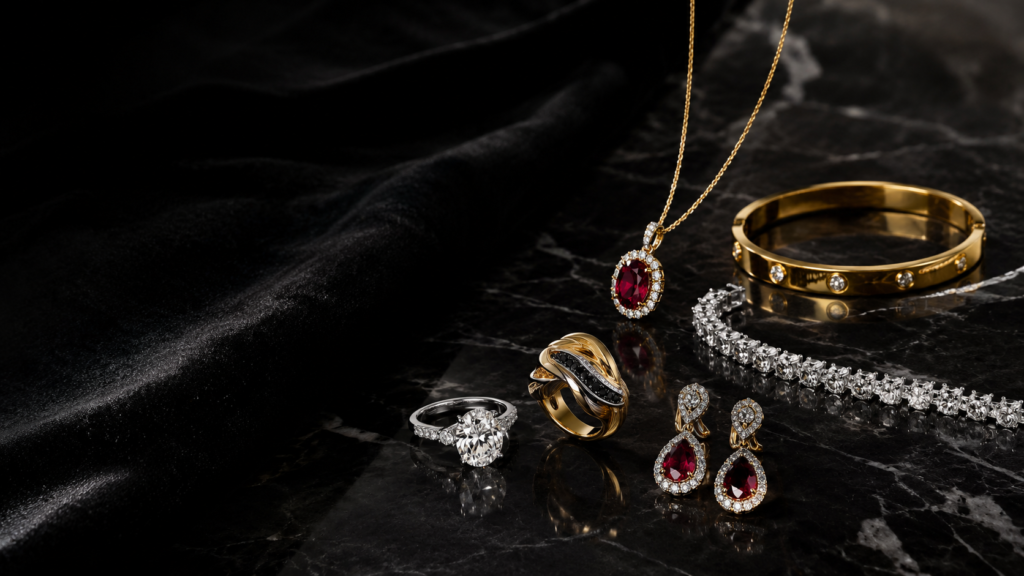
Luxury Jewelry: The Definitive Guide to Fine and Designer Jewelry
Amazon Affiliate Disclosure: Schopping.com may earn a commission from qualifying purchases made through Amazon links, at no additional cost to the individual. Product inclusion should be based on relevance, construction, material quality and suitability rather than commission rate.
Updated on July, 2026.
Luxury jewelry occupies a rare position between personal adornment, design, craftsmanship and memory. A ring can announce commitment. A necklace can alter the proportions of an entire outfit. A bracelet may become inseparable from a person’s daily identity, while a pair of earrings can change how the face catches light before anyone notices the clothing.
Yet price alone does not make jewelry luxurious.
True luxury jewelry is created through an alignment of material integrity, skilled construction, visual distinction, comfort, longevity and emotional relevance. A piece may be quiet rather than extravagant. It may contain no large gemstone. It may come from an independent goldsmith rather than a globally recognized house. What matters is whether the design, material and execution justify its presence and allow it to remain meaningful after novelty fades.
Within the broader world of Luxury Lifestyle, jewelry is unusually intimate. A handbag is carried, a car is driven and furniture occupies a room. Jewelry rests directly against the body. It moves with the wearer, absorbs personal history and often survives long enough to pass from one generation to another.
This guide explains what luxury jewelry is, how fine and designer jewelry differ, which metals and gemstones deserve attention, how to evaluate craftsmanship, what determines price, how to build a coherent collection and why the future of luxury is moving toward personal expression rather than visible excess.
Quick Picks: Explore the Complete Luxury Jewelry Guide
Understanding Luxury Jewelry
- What Is Luxury Jewelry?
- The Architecture of Value in Luxury Jewelry
- Fine Jewelry vs Fashion Jewelry
- Luxury Jewelry Materials: Gold, Platinum, Silver and Mixed Metals
- Diamonds, Colored Gemstones, Pearls and Alternative Stones
- Designer Jewelry, High Jewelry and Independent Craft
Jewelry Categories
- Luxury Rings: Identity, Commitment and Collectibility
- Luxury Bracelets: Movement, Stacking and Engineering
- Luxury Necklaces: Scale, Framing and Layering
- Luxury Earrings: Light, Proportion and Facial Balance
- Minimalist Jewelry: Quiet Luxury and Daily Precision
Selection and Evaluation
- How to Choose Luxury Jewelry for Your Style and Life
- Luxury Jewelry by Occasion
- How to Evaluate Luxury Jewelry Quality Before You Purchase
- Luxury Jewelry Price Framework
- Is Luxury Jewelry a Good Investment?
- Authenticity, Documentation and Provenance
- Ethical Sourcing and Responsible Luxury Jewelry
Ownership and Styling
- How to Build a Luxury Jewelry Collection
- How to Style Luxury Jewelry Without Overcrowding the Look
- Luxury Jewelry Care, Storage, Insurance and Maintenance
- Luxury Jewelry Trends Shaping 2026 and Beyond
- Common Luxury Jewelry Mistakes
Search Questions and Editorial Perspective
- Luxury Jewelry FAQs
- People Also Ask About Luxury Jewelry
- Editorial Insights: Where Luxury Jewelry Is Going Next
What Is Luxury Jewelry?
Luxury jewelry is jewelry in which material quality, craftsmanship, design authorship, construction, finishing and long-term desirability are treated as equally important.
It commonly uses precious metals such as gold or platinum and may feature diamonds, pearls or colored gemstones. Materials alone, however, do not establish luxury. A heavy gold object can still be poorly proportioned, roughly finished or visually generic. Conversely, a restrained gold band produced by an exceptional craftsperson may represent luxury through precision, comfort and intelligent design.
The most useful definition separates luxury jewelry into six dimensions:
- Material integrity: The metal and stones are accurately described and appropriate for the design.
- Construction quality: Joints, hinges, links, settings, clasps and edges function reliably.
- Design distinction: The piece has a recognizable visual idea rather than merely copying a popular form.
- Wearability: Weight, balance, scale and movement have been resolved for the body.
- Traceability: Materials, treatments, makers and relevant grading information can be documented.
- Emotional durability: The design remains personally meaningful beyond a single season.
Luxury Jewelry Is Not Defined by Visibility
Some luxury pieces are immediately recognizable. Others are intentionally discreet. A substantial diamond necklace may communicate ceremony, while a hand-finished platinum band may reveal its quality only when examined closely.
Luxury can therefore be expressive or private.
The common thread is intentionality. Nothing should feel accidental: not the thickness of a shank, the angle of a prong, the curve of an earring post or the way a pendant settles at the center of the chest.
Fine Jewelry, Luxury Jewelry and High Jewelry
These terms overlap, but they are not interchangeable.
| Term | Primary Meaning | Typical Materials | Defining Feature |
|---|---|---|---|
| Fine jewelry | Jewelry made from precious metals and genuine gemstones | Gold, platinum, diamonds, natural or laboratory-grown gemstones | Material category |
| Luxury jewelry | Fine jewelry elevated by design, craftsmanship, brand identity, rarity or service | Precious metals and premium stones | Overall value experience |
| Designer jewelry | Jewelry associated with a distinctive designer or design house | Varies from silver to high-value gemstones | Recognizable authorship |
| High jewelry | Exceptional one-of-a-kind or extremely limited creations | Rare gemstones, complex settings, precious metals | Rarity and artistic execution |
| Fashion jewelry | Style-led jewelry made from less costly materials | Base metals, plating, glass, resin, crystal | Accessible visual expression |
Fine jewelry tells you what a piece is made from. Luxury jewelry tells you how comprehensively the piece has been conceived and executed.
The Architecture of Value in Luxury Jewelry
A luxury jewelry price is rarely the sum of metal weight and gemstone value alone. The price is better understood as a layered structure.
The Luxury Jewelry Value Stack
| Value Layer | What It Represents | Questions to Ask |
|---|---|---|
| Material value | Precious-metal content and gemstone characteristics | What are the metal purity, stone identity and treatments? |
| Labor value | Stone setting, fabrication, polishing and assembly | How difficult was the piece to create and finish? |
| Design value | Originality, proportion and recognizable visual language | Does the design possess a clear identity? |
| Rarity value | Limited production, unusual stones or difficult techniques | Can the piece be easily reproduced or replaced? |
| Brand value | Reputation, heritage, service and market recognition | What does the maker add beyond the materials? |
| Provenance value | Ownership history, documentation and cultural relevance | Is there a meaningful and verifiable history? |
| Emotional value | Personal milestones, relationships and memory | Would the piece remain important without resale value? |
Editorial Value Chart
The following chart is a decision framework rather than market data. It shows how much attention each component deserves when judging a luxury piece.
Craftsmanship        ██████████  Essential
Material integrity   ██████████  Essential
Wearability          █████████   Extremely important
Design identity      █████████   Extremely important
Documentation        ████████    Highly important
Brand recognition    ██████      Context-dependent
Trend relevance      ███         Secondary
Logo visibility      ██          Optional
The chart reveals an important principle: the visible logo may be the least durable source of value.
A person choosing jewelry primarily for recognition may reasonably prioritize brand equity. Someone building an heirloom collection should look more closely at construction, material integrity, proportions and long-term serviceability.
Price and Value Are Not Synonyms
An expensive piece can be overpriced if its cost rests mainly on marketing. An unbranded piece can be exceptional if it contains an extraordinary stone, complex handwork or unusually refined design.
Value should therefore be judged against purpose.
A daily bracelet must survive movement. A cocktail ring may prioritize scale and visual drama. An heirloom necklace should be repairable, documentable and resistant to stylistic obsolescence. Each succeeds under different conditions.
Fine Jewelry vs Fashion Jewelry
The fine jewelry vs fashion jewelry comparison should not be treated as a moral ranking. Each category solves a different style problem.
Fine jewelry emphasizes material permanence and long-term ownership. Fashion jewelry emphasizes experimentation, accessibility and rapid visual change. Luxury fashion jewelry can also involve sophisticated design even when its underlying materials carry less intrinsic value.
Fine Jewelry vs Fashion Jewelry Comparison Table
| Feature | Fine Jewelry | Fashion Jewelry |
|---|---|---|
| Common metals | Gold, platinum, sterling silver | Brass, steel, copper alloys, plated base metals |
| Common stones | Diamonds, sapphires, rubies, emeralds, pearls, fine gemstones | Crystal, glass, resin, synthetic decorative stones |
| Longevity | Often suitable for long-term ownership | Depends heavily on plating and construction |
| Repair potential | Frequently repairable or resizable | Repairs may cost more than replacement |
| Price structure | Materials, labor, design and brand | Design, manufacturing and branding |
| Daily wear | Suitable when construction matches lifestyle | Varies; plating can wear under friction |
| Resale potential | Possible, but highly variable | Usually limited except collectible designer pieces |
| Best role | Milestones, daily signatures, heirlooms | Trend exploration, travel, seasonal styling |
| Main risk | Paying a premium without understanding quality | Confusing visual luxury with material value |
When Fine Jewelry Makes More Sense
Fine jewelry is generally more suitable when:
- The piece will be worn frequently.
- It marks a major personal event.
- Repairability matters.
- Metal allergies or material sensitivities require clearer composition.
- The piece is intended to remain in the family.
- A person prefers fewer objects with greater personal significance.
When Fashion Jewelry Makes More Sense
Fashion jewelry can be the intelligent choice when:
- A dramatic trend may not remain appealing.
- The piece will be worn only for a particular event.
- Large scale would be impractical or prohibitively expensive in solid precious metal.
- A person wants to test a new silhouette before commissioning a fine version.
- Travel conditions make carrying valuable jewelry unwise.
The most sophisticated wardrobe often contains both. Fashion jewelry supplies scale and experimentation; fine jewelry supplies continuity.
Luxury Jewelry Materials: Gold, Platinum, Silver and Mixed Metals
Metal is not simply the frame surrounding a gemstone. It determines color, weight, durability, maintenance, skin response and how a design ages.
Gold Jewelry
Pure gold is soft, so jewelry gold is commonly alloyed with other metals to improve strength and alter color. In standard karat terminology, 18K gold contains 75% gold, while 14K contains approximately 58.3%. Hallmarks may express these as 750 and 585 or 583, depending on jurisdiction and manufacturing convention.
18K Gold
18K gold offers a rich color and higher gold content. It is often favored in luxury jewelry because it balances preciousness with practical wearability.
Its advantages include:
- Saturated yellow, rose or white-metal appearance
- Strong association with fine and designer jewelry
- Good suitability for detailed finishing
- Substantial material value
- Lower proportion of alloying metals than 14K gold
Its limitations include greater softness than lower-karat alternatives and a higher replacement or repair cost.
14K Gold
14K gold is often well suited to everyday jewelry because its higher alloy content can improve practical durability.
It may be preferable for:
- Frequently worn rings
- Delicate chains
- Active lifestyles
- Pieces exposed to regular contact
- Individuals who value resilience over richer gold color
Purity should not be confused with universal superiority. An 18K ring is not automatically better than a 14K ring if the latter better suits the wearer’s routine.
Yellow Gold
Yellow gold provides warmth and visual continuity. It is especially effective with diamonds that benefit from contrast, as well as emeralds, rubies, turquoise, coral tones and warm-colored gemstones.
Its appearance can shift from pale to intensely saturated depending on karat and alloy composition.
White Gold
White gold is created by alloying gold with lighter-colored metals and is often rhodium plated to produce a bright white surface. That plating can wear and may eventually need renewal, especially on rings and bracelets exposed to friction.
White gold can provide:
- A bright, contemporary appearance
- A lower entry point than some platinum designs
- Strong contrast with diamonds
- Compatibility with cool-toned wardrobes
A person should ask whether the piece is rhodium plated, how often the finish may require maintenance and whether the alloy contains metals relevant to skin sensitivity.
Rose Gold
Rose gold obtains its color primarily from copper-containing alloys. Its warmth can soften geometric designs and create a flattering transition between jewelry and skin.
It pairs particularly well with:
- Morganite
- Pink sapphire
- Champagne diamonds
- Pearls
- Brown diamonds
- Warm enamel
- Vintage-inspired forms
Platinum Jewelry
Platinum is dense, naturally white and associated with high-value stone settings. Its weight can create a reassuring sense of substance, although that same density may feel excessive in large earrings or broad necklaces.
Platinum is especially compelling for:
- Engagement rings
- Diamond-intensive designs
- Heirloom settings
- Individuals who prefer a naturally white metal
- Pieces where structural security is central
Platinum develops a patina rather than losing its identity as a white metal. Some individuals value that softened surface; others prefer periodic refinishing.
Sterling Silver
Sterling silver can support exceptional designer jewelry, particularly when scale, sculptural form and artistic experimentation matter. It should not be dismissed simply because it costs less than gold.
Its limitations include tarnishing and lower material value, but good silver jewelry may offer:
- Strong visual presence
- Substantial scale without extreme weight or cost
- Expressive surface treatments
- Accessible work from independent designers
- Collectibility based on design rather than raw material
Mixed-Metal Jewelry
Combining yellow gold, white gold, rose gold, silver or platinum creates visual flexibility and reduces the pressure to keep every accessory in one metal family.
Mixed metals have become particularly relevant as luxury styling moves away from rigid matching and toward individual layering. Recent fashion coverage has identified gold-and-silver combinations as a prominent 2026 direction rather than a styling mistake.
Precious Metal Selection Table
| Metal | Visual Character | Practical Strength | Maintenance | Best Use |
|---|---|---|---|---|
| 18K yellow gold | Rich, warm, traditional | High | Light polishing | Heirlooms, statement pieces, daily fine jewelry |
| 14K yellow gold | Slightly lighter warmth | Very high | Low to moderate | Active daily wear |
| White gold | Bright, crisp, modern | High | Rhodium renewal may be needed | Diamond settings, modern designs |
| Rose gold | Warm, romantic, distinctive | High | Low to moderate | Personal jewelry, vintage-inspired forms |
| Platinum | Dense, naturally white, restrained | Very high | Develops patina | Important rings, heirloom stone settings |
| Sterling silver | Cool, sculptural, versatile | Moderate | Tarnish management | Large forms, designer jewelry |
| Mixed metal | Layered, adaptable, contemporary | Depends on construction | Metal-specific | Transitional wardrobes and stacking |
Diamonds, Colored Gemstones, Pearls and Alternative Stones
The gemstone should be judged as part of a complete composition. Size is visible, but proportion, cut, color, setting and relationship to the body determine whether the finished piece feels luxurious.
Diamonds
Diamonds are evaluated through cut, color, clarity and carat weight, commonly known as the 4Cs. These characteristics form the global language used to describe diamond quality, but the most visually successful stone is not necessarily the one with the highest grade in every category.
Cut
Cut controls how effectively a faceted diamond handles light. A well-proportioned stone can appear lively and visually larger than a poorly cut stone of greater weight.
Color
In many colorless diamonds, lower visible body color is valued. Yet the surrounding metal changes perception. Slight warmth may be less noticeable in yellow gold than in a white-metal setting.
Clarity
Clarity concerns internal and external characteristics. Many inclusions cannot be seen without magnification. Paying for a clarity grade far beyond what the eye can detect may offer little practical visual benefit.
Carat Weight
Carat is weight, not visible size. Two diamonds of equal carat weight may face up differently because of their proportions and shape.
Natural and Laboratory-Grown Diamonds
Natural and laboratory-grown diamonds share fundamental chemical and optical characteristics, but their origin, pricing structure, rarity narrative and market behavior differ.
Specialized testing may be required to distinguish origin reliably. GIA notes that traditional visual examination alone may not be sufficient and that advanced laboratory assessment is used for definitive identification.
A person should therefore ask:
- Is the diamond natural or laboratory-grown?
- Is that origin clearly disclosed?
- Does the stone have an independent report when appropriate?
- Has the stone received post-growth treatment?
- Is the report number verifiable?
- Is the pricing consistent with the diamond’s category?
Laboratory-grown diamonds can be suitable for individuals prioritizing size, design or a lower initial price. Natural diamonds may appeal more strongly to those who value geological rarity and established collectible narratives. Neither category should be described ambiguously.
Colored Gemstones
Colored stones require a different way of seeing. Color often dominates the decision, but durability, transparency, treatments, origin, cut and setting remain important.
| Gemstone | Visual Appeal | Practical Consideration | Strong Luxury Applications |
|---|---|---|---|
| Sapphire | Broad color range and strong saturation | Treatment disclosure matters | Rings, earrings, bracelets |
| Ruby | Intense red and historical prestige | Fine untreated material is rare | Statement rings, pendants |
| Emerald | Distinctive green and visible internal character | Often requires gentler wear | Necklaces, earrings, protected rings |
| Amethyst | Rich violet with accessible scale | Color consistency varies | Cocktail rings, pendants |
| Aquamarine | Clear blue and elegant transparency | Pale stones can appear washed out | Earrings, necklaces |
| Tourmaline | Wide color range and individuality | Durability varies by setting and wear | Designer statement jewelry |
| Spinel | Lively color and growing recognition | Less familiar to some individuals | Rings, earrings, collector pieces |
| Tanzanite | Blue-violet color shift | Requires thoughtful care | Occasion jewelry |
| Opal | Unique play of color | Sensitive to impact and environmental stress | Pendants, earrings, protected rings |
The highest-priced gemstone is not necessarily the right one. A strongly colored, well-cut spinel may be more compelling than a weakly saturated sapphire chosen only for name recognition.
Pearls
Pearls introduce light without faceting. Their beauty depends on luster, surface, shape, color, size and matching.
Luxury pearl jewelry may feature:
- Akoya pearls for mirror-like luster and classic proportion
- South Sea pearls for scale and satin-like radiance
- Tahitian pearls for dark body colors and complex overtones
- Freshwater cultured pearls for variety, organic shape and accessible design possibilities
Pearls should be evaluated in motion. Their overtones change under different lighting and against different skin and fabric colors.
Alternative Luxury Stones
Luxury design is increasingly open to materials beyond the conventional precious-stone hierarchy. Moonstone, lapis lazuli, onyx, malachite, turquoise, rock crystal, chalcedony and carved hardstones can create exceptional pieces when material and form are intelligently matched.
The luxury lies in the quality of the idea and execution—not merely in the market price of the stone.
Designer Jewelry, High Jewelry and Independent Craft
Designer jewelry becomes valuable when authorship is visible in the object.
A successful designer develops a visual language: a particular treatment of volume, a recurring motif, an identifiable clasp, a style of setting or a recognizable relationship between geometry and the body.
Designer Jewelry
Designer jewelry may be produced by:
- Historic jewelry houses
- Fashion houses with fine-jewelry divisions
- Independent goldsmiths
- Artist-jewelers
- Specialist gemstone designers
- Small ateliers producing limited collections
The relevant question is not simply, “Is this a famous name?” It is, “What does this designer contribute that the material alone cannot explain?”
High Jewelry
High jewelry represents the most ambitious end of the field. Pieces may involve rare gemstones, exceptional stone matching, complex mechanisms, specialized carving or setting, and hundreds or thousands of hours of work.
Recent high-jewelry presentations have emphasized rarity, craft, cultural storytelling and direct relationships between houses and collectors. Industry coverage in 2026 also suggests that high jewelry has remained resilient even while other luxury categories have faced softer demand.
High jewelry is not simply “more expensive fine jewelry.” It functions closer to wearable art.
Independent Jewelry
Independent designers can offer a different type of luxury:
- Direct communication with the maker
- Greater customization
- Lower production volume
- Unusual stones
- Experimental forms
- Stronger regional or cultural identity
- More visible evidence of handwork
The trade-off is that independent work may have less immediate resale recognition. Documentation, craftsmanship and the integrity of the design therefore matter even more.
Brand Name vs Design Merit
| Priority | Established House | Independent Designer |
|---|---|---|
| Immediate recognition | Usually stronger | Usually lower |
| Resale liquidity | Can be stronger for iconic collections | Often limited |
| Personalization | May be restricted | Often extensive |
| Direct maker relationship | Less common | More common |
| Design experimentation | Depends on house | Often central |
| Service network | Usually broader | More personal but smaller |
| Production rarity | Varies widely | Often naturally limited |
A coherent collection can contain both: recognized icons for continuity and independent work for individuality.
Luxury Rings: Identity, Commitment and Collectibility
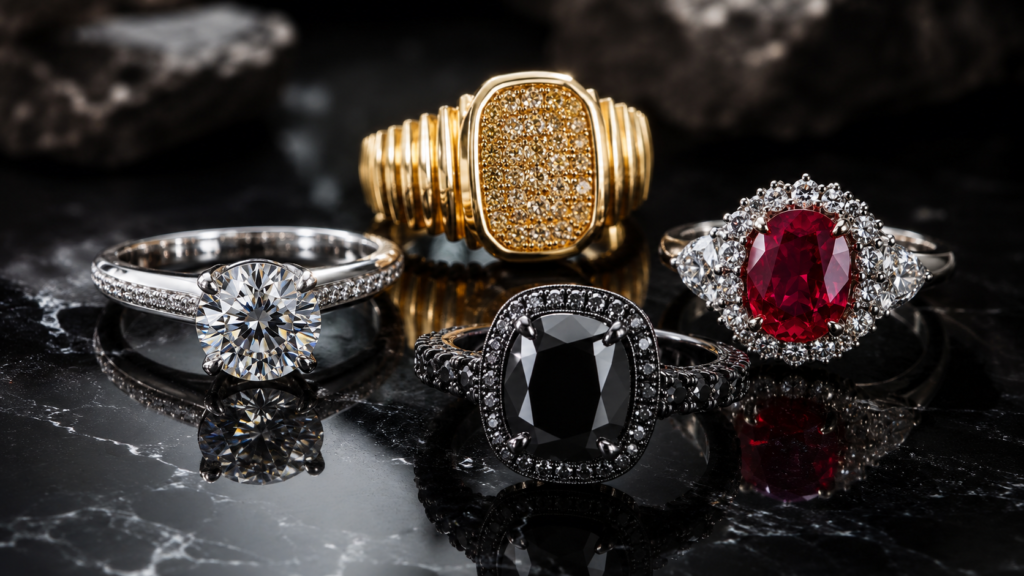
Rings occupy a psychologically powerful position because they are visible to both the wearer and everyone nearby. Unlike earrings, which the wearer rarely sees without a mirror, a ring remains within the wearer’s own field of vision.
This makes rings ideal for private meaning as well as public symbolism.
The complete Luxury Rings guide examines diamond rings, gemstone rings, statement rings, designer bands and heirloom-worthy forms in greater depth.
Major Types of Luxury Rings
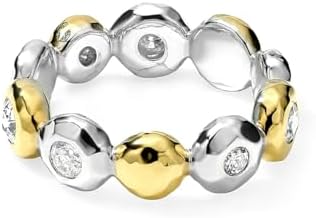
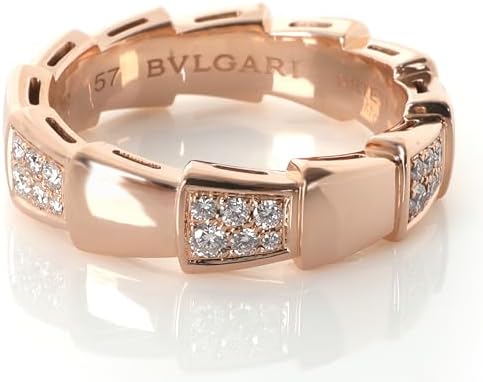


Engagement Rings
An engagement ring combines symbolic expectation with practical engineering. Its setting must protect the center stone, suit the hand and withstand the wearer’s routine.
The most expensive option is not automatically the most successful. Proportion between stone, setting and finger is more important than isolated carat weight.
Wedding Bands
A luxury wedding band should be considered in relation to the engagement ring but should also possess enough integrity to be worn independently.
Important factors include:
- Width
- Profile
- Metal compatibility
- Height against the engagement setting
- Diamond placement
- Resizing potential
- Comfort over long periods
Cocktail Rings
Cocktail rings prioritize presence. They may use large colored stones, sculptural metalwork, unusual cuts or asymmetrical construction.
Because scale increases exposure to impact, protective settings and intelligent balance are essential.
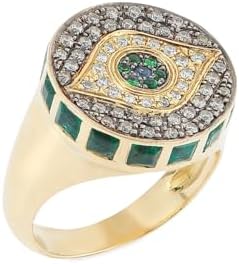
Signet Rings
Signet rings combine history with modern identity. They may feature engraving, family symbols, abstract geometry, hardstone inlays or a completely unadorned surface.
Their luxury is often expressed through weight, proportion and engraving quality rather than gemstone size.
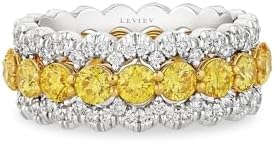
Eternity and Anniversary Rings
Full eternity rings provide uninterrupted visual rhythm but can be difficult to resize. Partial eternity designs often offer greater comfort and future flexibility.
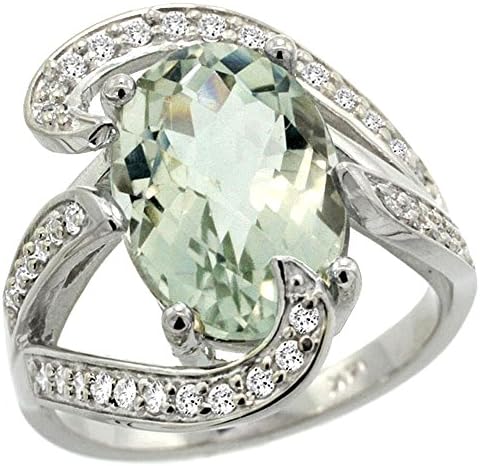
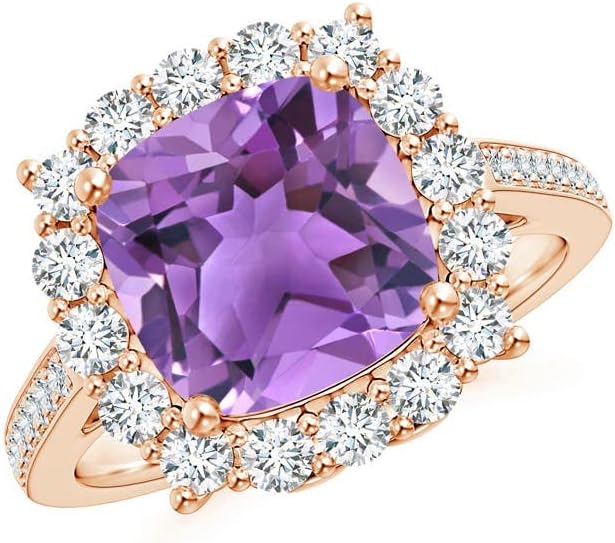
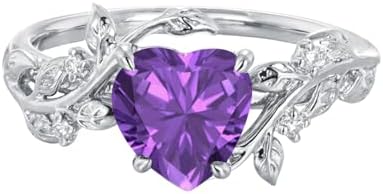
The Mystique of Amethyst Rings
An amethyst jewelry ring is a statement of “Emotional Intelligence”. Because amethyst is associated with peace and the quenching of “internal fires,” wearing it on the finger—the tool of direction and command—suggests a leader who acts with a cool head and a steady heart. Our 2026 amethyst rings are cut in “Power Shapes”—hexagons and deep emerald cuts—to maximize their psychological impact.


Ring Quality Checklist
| Element | What Good Construction Looks Like | Warning Sign |
|---|---|---|
| Shank | Consistent thickness and comfortable profile | Thin lower shank that may distort |
| Prongs | Even, secure and smoothly finished | Snagging, uneven or excessively bulky prongs |
| Gallery | Clean support beneath the stone | Rough solder or inaccessible dirt traps |
| Stone alignment | Symmetrical and properly seated | Tilted or unevenly spaced stones |
| Interior | Smooth and polished | Sharp edges or visible unfinished areas |
| Balance | Ring remains reasonably upright | Top-heavy design that constantly rotates |
Luxury Bracelets: Movement, Stacking and Engineering
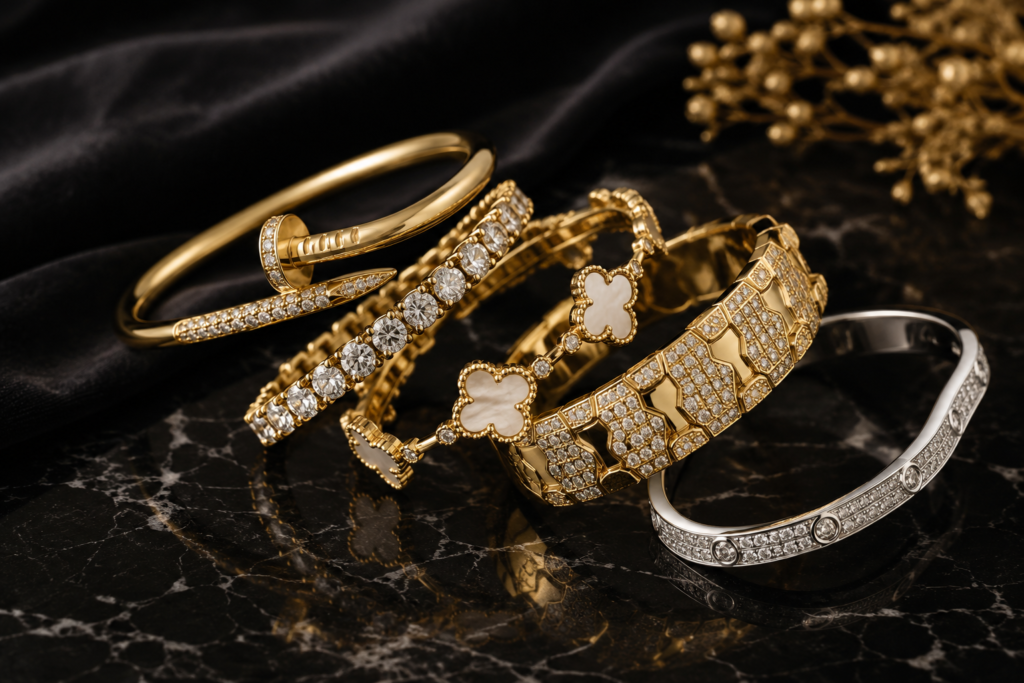
Bracelets are among the most mechanically demanding forms of jewelry. They encounter desks, sleeves, bags, doorframes and constant motion. A bracelet may look delicate in a photograph while depending on dozens of small components in actual wear.

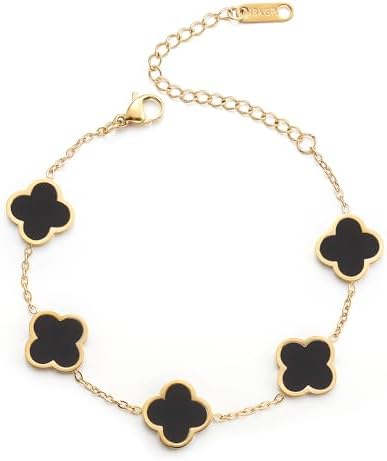


Explore the wider world of cuffs, tennis bracelets, bangles, chains and collectible wristwear in the Luxury Bracelets guide.
Tennis Bracelets




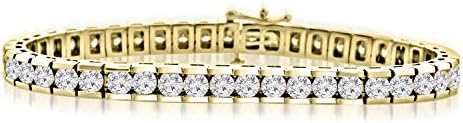
A tennis bracelet is successful when its line appears fluid while every stone remains securely articulated.
For those who prefer a more maximalist approach, our high end tennis bracelets offer a “shield” of brilliance. To wear a heavy, jewel-encrusted piece on the wrist is to claim power over one’s actions. It is a visual representation of “The Midas Touch”—the idea that everything you handle turns to value.



Examine:
- Link flexibility
- Setting consistency
- Clasp security
- Safety catch design
- Stone matching
- Underside finishing
- Whether the bracelet twists during wear
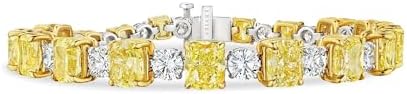
The line should move like fabric without feeling fragile.
Bangles
Bangles create shape through repetition and negative space. Their success depends on diameter, opening method, weight distribution and how they interact when stacked.
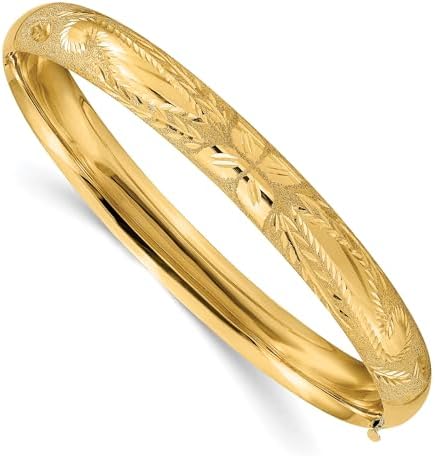

A solid bangle offers permanence and substance. A hinged bangle may fit more closely but relies on the quality of its hinge and clasp.
Chain Bracelets
Chain bracelets range from delicate cable links to heavy curb, anchor, paperclip and sculptural forms.
Each link should be evaluated as a structural component. Hollow links can provide scale with less weight, but they may dent more easily and be difficult to restore.
Cuffs
A cuff can function almost like a small piece of architecture. It frames the wrist rather than simply circling it.
The interior should be smooth, the opening should suit the wrist and the structure should not require repeated bending unless it was designed for controlled flexibility.
Bracelet Selection Table
| Bracelet Type | Visual Effect | Daily-Wear Suitability | Main Quality Check |
|---|---|---|---|
| Tennis bracelet | Continuous brilliance | High with secure construction | Articulation and clasp |
| Solid bangle | Clean, architectural | High | Fit and wall thickness |
| Hinged bangle | Close-fitting polish | High | Hinge and closure |
| Chain bracelet | Relaxed movement | High | Link soldering |
| Gemstone bracelet | Color and rhythm | Moderate to high | Stone matching |
| Wide cuff | Sculptural impact | Occasion-dependent | Comfort and structural integrity |
Luxury Necklaces: Scale, Framing and Layering
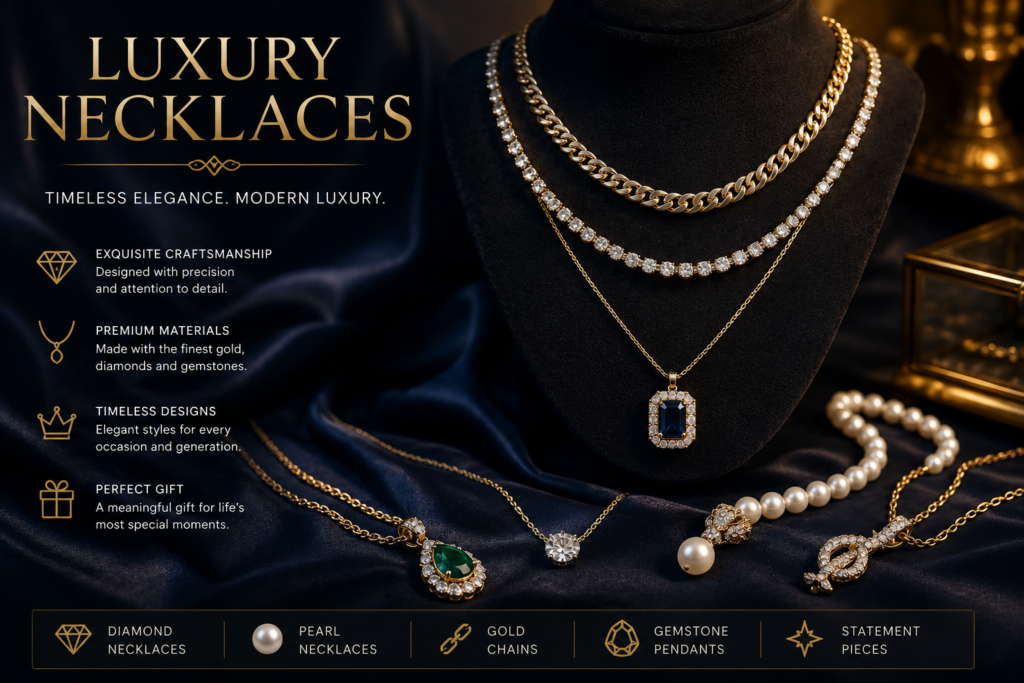
A necklace is not merely an object worn around the neck. It establishes a visual relationship between the face, neckline, shoulders and torso.
The right length can elongate the body, frame the collarbone or create a focal point. The wrong length may compete with clothing or cause a pendant to disappear into a neckline.
The dedicated Luxury Necklaces page explores diamond necklaces, pearl necklaces, tennis necklaces, gold chains, pendants and statement designs in greater detail.
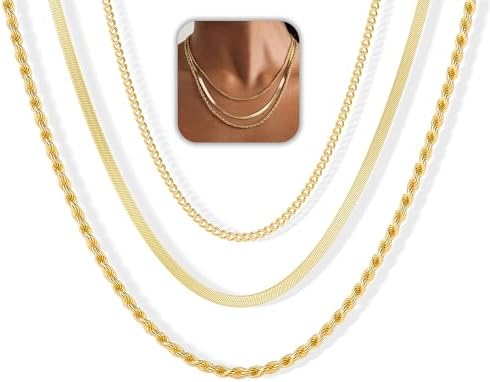
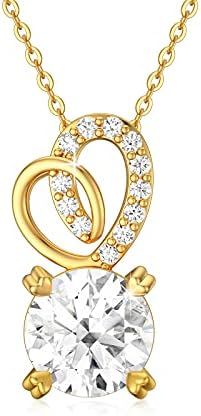




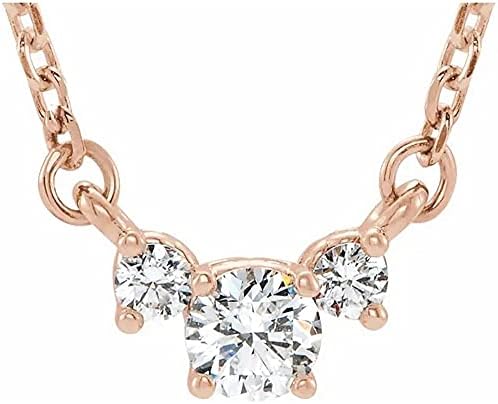

Pendant Necklaces
Pendant necklaces concentrate meaning into a single focal point. The pendant may be symbolic, gemstone-led, sculptural or purely geometric.
Quality depends on more than the pendant itself. The bail, chain gauge and clasp must be strong enough for the pendant’s weight.
Tennis Necklaces
A tennis necklace creates an uninterrupted line of stones. The best examples sit evenly around the neck without flipping, twisting or creating hard angles.
Important details include:
- Articulation
- Graduated or uniform stone sizing
- Back-link comfort
- Clasp integration
- Flexibility
- Consistent setting height
- Accurate stone matching
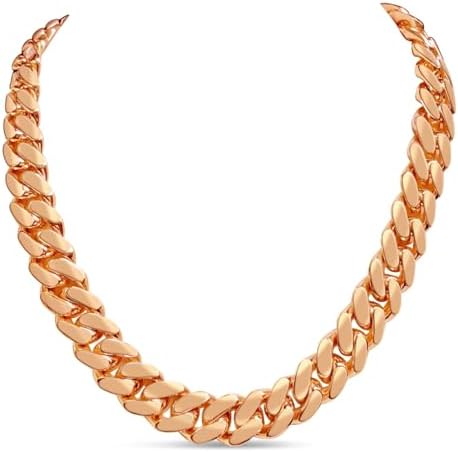
Gold Chains
A luxury chain may be delicate or substantial, but its value lies in link geometry, finish, weight, closure and the way it handles movement.
Common forms include:
- Cable
- Curb
- Figaro
- Rope
- Snake
- Box
- Wheat
- Herringbone
- Paperclip
- Anchor
- Byzantine
Herringbone and snake chains produce a smooth visual surface but require careful storage because sharp bends can cause lasting damage.
Pearl Necklaces
Pearl necklaces are judged by luster, matching, graduation, knotting and clasp quality. A luxury strand should feel coherent without appearing lifelessly uniform.
The strongest pearl necklaces reveal subtle depth when light moves across the surface.
Statement Necklaces
A statement necklace should command attention without appearing disconnected from the person wearing it. Scale must relate to shoulder width, neck length, clothing volume and occasion.
Necklace Length Framework
| Approximate Length | Typical Position | Best Use |
|---|---|---|
| 14–16 inches | Close to neck or collarbone | Open necklines, layering base |
| 17–18 inches | Around collarbone | Pendants, everyday chains |
| 20–24 inches | Upper chest | Larger pendants, layering |
| 28–36 inches | Mid-chest or lower | Long chains, opera-length pearls |
| Adjustable | Multiple positions | Versatile wardrobes |
Individual anatomy and garment construction matter more than the label attached to the length.
Luxury Earrings: Light, Proportion and Facial Balance
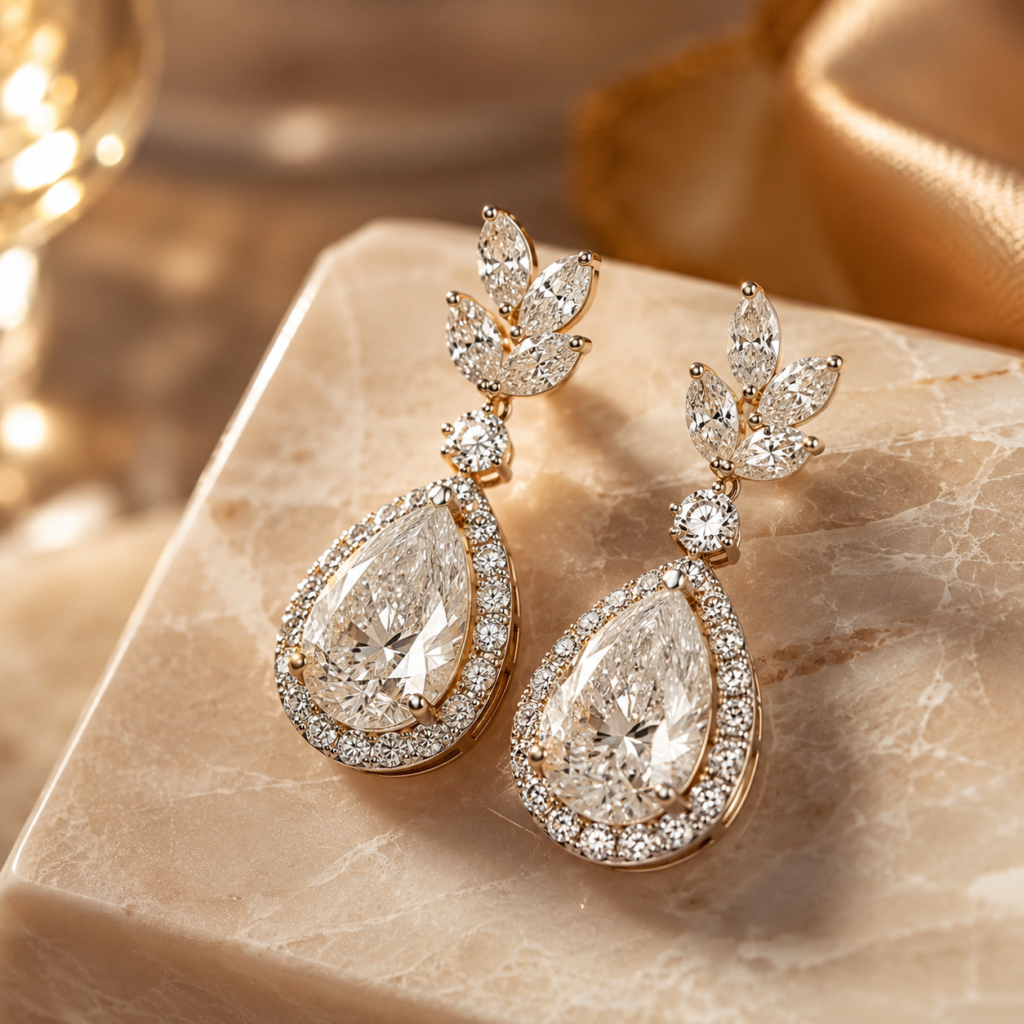

Earrings introduce metal and gemstones directly beside the face. Their visual effect depends on movement, skin tone, hairstyle, neck length and the relationship between the earring and the jawline.
The Luxury Earrings guide covers studs, hoops, drops, chandeliers, ear cuffs and diamond or gemstone designs in greater depth.


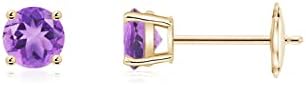
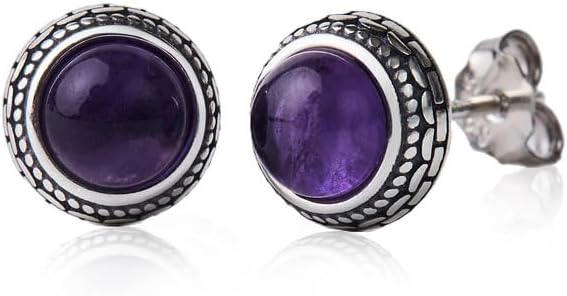
Stud Earrings

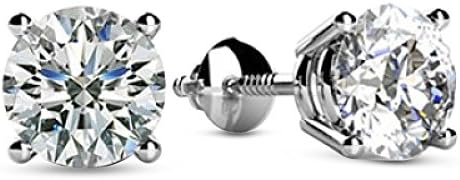

Studs can appear simple, but small differences in setting and proportion are highly visible.


A well-designed stud should:
- Sit correctly on the lobe
- Avoid drooping
- Use a secure backing
- Allow sufficient light around the stone
- Avoid excessively long posts
- Balance face-up size against comfort



Hoop Earrings


Hoops can be thin and restrained or bold and architectural. Diameter determines drama, but tube thickness determines visual authority.
Hollow hoops reduce weight but may dent. Solid hoops provide greater substance but can become uncomfortable at larger scales.
Drop Earrings

Drop earrings create vertical movement and can visually lengthen the neck. The connection points should move smoothly without allowing the earring to twist into an unattractive position.
Chandelier Earrings
Chandelier earrings depend on rhythm. Each section should contribute to an intentional sequence of light and motion.
Weight is crucial. An impressive earring that becomes painful after twenty minutes has failed as luxury design.
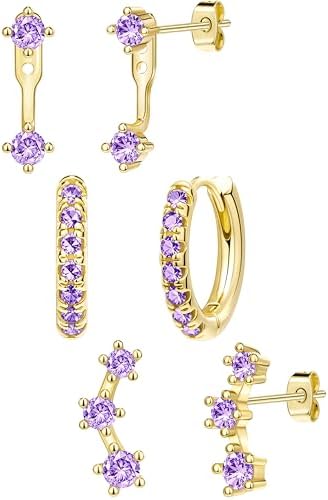
Ear Cuffs and Climbers
Ear cuffs and climbers extend design beyond the conventional lobe position. They can create the effect of multiple piercings or introduce a stronger contemporary line.
Fit should be secure without excessive pressure.
Earring Selection by Visual Effect
| Earring Type | Visual Effect | Best Styling Role |
|---|---|---|
| Diamond or gemstone stud | Concentrated light | Daily polish |
| Small hoop | Soft framing | Everyday versatility |
| Large hoop | Graphic outline | Confident minimalism |
| Linear drop | Vertical elongation | Formal dressing |
| Chandelier | Movement and drama | Evening occasions |
| Ear cuff | Edge and asymmetry | Contemporary layering |
| Cluster earring | Wider brilliance | Ceremonial or statement wear |

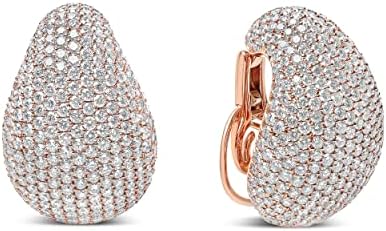
Minimalist Jewelry: Quiet Luxury and Daily Precision
Minimalist jewelry is often misunderstood as jewelry that is merely small.
True minimalist jewelry removes unnecessary detail while preserving proportion, tension and finish. Because there is little ornament to distract the eye, every curve and junction becomes more visible.
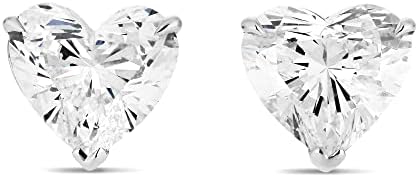
A plain gold band exposes the quality of its profile. A single-stone pendant exposes the relationship between chain, bail and setting. A polished cuff exposes surface consistency and edge control.
What Makes Minimalist Jewelry Luxurious?
- Precise proportions
- Substantial enough construction
- Clean transitions
- Comfortable contact with the body
- Intentional negative space
- High-quality polishing
- Well-designed closures
- Compatibility with repeated wear
Quiet Luxury vs Invisible Jewelry
Quiet luxury does not require jewelry to disappear.
A broad gold cuff can be visually forceful while remaining minimalist. A sculptural ring can be unmistakable without logos, pavé or ornament. Minimalism concerns clarity of design, not lack of presence.
Minimalist Jewelry Wardrobe
A functional minimalist collection might contain:
- A pair of proportionate studs
- A medium-scale hoop
- A refined chain
- A pendant with personal significance
- A comfortable band or signet ring
- A structured bangle or chain bracelet
These pieces can form the visual grammar of daily dress.
How to Choose Luxury Jewelry for Your Style and Life
The strongest purchase begins with the wearer rather than the object.
Jewelry should be assessed against routine, body proportions, clothing, work, climate, maintenance tolerance and emotional purpose.
The Five-Part Luxury Jewelry Selection Framework
1. Purpose
Determine whether the piece is intended for:
- Daily wear
- Formal events
- A personal milestone
- Gifting
- Collecting
- Travel
- Commemoration
- Long-term family ownership
Purpose establishes the practical standard.
2. Personal Visual Language
Look at what the person already wears repeatedly.
Do they prefer:
- Geometry or organic forms?
- Symmetry or asymmetry?
- Warm or cool metals?
- Delicate or substantial scale?
- Polished or textured surfaces?
- Color or monochrome?
- Recognizable icons or discreet design?
Repeated choices reveal more than aspirational mood boards.
3. Physical Compatibility
Consider:
- Finger shape
- Wrist circumference
- Neck length
- Earlobe placement
- Sensitivity to weight
- Metal sensitivity
- Hair length
- Dominant clothing necklines
- Whether jewelry catches on garments
Luxury should reduce friction, not create it.
4. Maintenance Tolerance
Some pieces require periodic replating, restringing, polishing, inspection or professional cleaning.
A person who dislikes maintenance should avoid designs that demand constant intervention.
5. Emotional Horizon
Ask whether the piece is meant to feel exciting for six months, relevant for ten years or meaningful for a lifetime.
Each horizon supports a different level of spending and experimentation.
Luxury Jewelry Decision Matrix
| Lifestyle | Strong Choices | Approach Carefully |
|---|---|---|
| Active daily routine | Low-profile rings, secure studs, solid chains | Tall settings, fragile stones |
| Formal professional setting | Refined earrings, restrained necklace, structured bracelet | Noisy stacks, oversized movement |
| Creative environment | Mixed metals, independent designers, sculptural forms | Overly conventional pieces without personal connection |
| Frequent travel | Versatile moderate-value pieces, secure closures | Highly recognizable or irreplaceable heirlooms |
| Minimal wardrobe | One strong cuff, chain or signet | Multiple pieces competing for attention |
| Event-focused wardrobe | Statement earrings, cocktail rings, dramatic necklaces | Pieces selected only for daily practicality |
Luxury Jewelry by Occasion
Jewelry gains meaning from context. A piece should not simply be expensive; it should be appropriate to the moment.
Everyday Luxury Jewelry
Everyday luxury requires comfort, durability and visual adaptability.
Strong options include:
- Diamond or gemstone studs
- Medium gold hoops
- Low-profile rings
- Signet rings
- Fine chains
- Small pendants
- Tennis bracelets with secure clasps
- Solid bangles
- Simple pearl earrings
Luxury Jewelry for Work
Professional jewelry should support presence rather than distract from communication.
Consider:
- Controlled movement
- Moderate scale
- Secure backs and clasps
- Pieces that do not strike a keyboard or desk
- Necklaces compatible with recurring necklines
- Jewelry that remains comfortable through long days
Evening and Formal Jewelry
Evening lighting allows diamonds, crystals, polished metal and richly colored gemstones to become more expressive.
A single focal piece often creates greater authority than several unrelated statement pieces.
Wedding Jewelry
Wedding jewelry should be selected in relation to:
- Dress neckline
- Hair position
- veil or headpiece
- embroidery
- metal details
- ceremony lighting
- photography
- intended future wear
Pieces that remain wearable after the wedding often carry greater emotional durability.
Anniversary and Milestone Jewelry
Milestone jewelry benefits from symbolic clarity.
The symbolism may come from:
- A specific gemstone
- Engraving
- Number of stones
- Custom motif
- Reworked family material
- A design connected to place or memory
Luxury Jewelry Gifts
A successful jewelry gift reflects the recipient rather than the giver’s idea of luxury.
When uncertain, prioritize:
- Adjustable lengths
- Earrings that do not depend on exact sizing
- Familiar metal preferences
- Exchange options
- Clear documentation
- Designs related to known habits
Rings and rigid bracelets require greater sizing confidence.
How to Evaluate Luxury Jewelry Quality Before You Purchase
Luxury quality reveals itself through details that photography often conceals.
Examine the Piece from Every Direction
The underside matters. So do the back, interior and connection points.
Look for:
- Smooth edges
- Clean soldering
- Consistent polish
- Symmetrical settings
- Secure stones
- Appropriate metal thickness
- Functional closures
- Finished interior surfaces
- Balanced weight
A piece should not become careless where it is less visible.
Assess Stone Setting
Prongs should hold the stone without overwhelming it. Pavé should appear orderly. Bezel edges should be even. Channel-set stones should align without visible instability.
Warning signs include:
- Uneven prongs
- Gaps around stones
- Stones sitting at different heights
- Rough metal near settings
- Loose movement
- Threads catching on prongs
- Excessively thin structural metal
Test the Mechanisms
Open and close clasps, hinges and earring backs several times.
A luxury mechanism should provide tactile certainty. It should not require force, feel vague or release unexpectedly.
Evaluate Weight Honestly
Weight can signal substance, but unnecessary weight can reduce comfort. Hollow construction is not automatically inferior, yet it must be disclosed and structurally appropriate.
The correct question is not “Is it heavy?” but “Is the weight intelligently distributed?”
Ask for Material Disclosure
The description should clarify:
- Metal type
- Purity
- Plating
- Gemstone identity
- Natural or laboratory-grown origin
- Treatments
- Pearl type
- Solid or hollow construction when relevant
- Total carat weight versus center-stone weight
The FTC Jewelry Guides emphasize accurate descriptions of precious metals, gemstones, laboratory-created stones, imitations and cultured pearls.
Online Luxury Jewelry Checklist
| Information | Why It Matters |
|---|---|
| Multiple high-resolution images | Reveals finishing, profile and scale |
| Video in movement | Shows articulation and light behavior |
| Dimensions in millimeters | Prevents misleading scale assumptions |
| Gram weight | Clarifies substance |
| Metal purity and hallmark details | Supports material verification |
| Stone identity and treatment disclosure | Prevents category confusion |
| Return policy | Protects against fit or proportion mismatch |
| Warranty and repair terms | Indicates long-term support |
| Independent grading report when appropriate | Supports gemstone verification |
| Clear seller identity | Improves accountability |
Luxury Jewelry Price Framework
Luxury jewelry prices can range from accessible fine-jewelry levels to amounts comparable with property, art or rare automobiles. A useful framework looks at the source of cost rather than assigning arbitrary price labels.
What Determines Luxury Jewelry Price?
- Precious-metal type and weight
- Gemstone rarity and quality
- Stone size and matching
- Hand fabrication
- Complexity of setting
- Design authorship
- Production volume
- Brand recognition
- Provenance
- Retail service and presentation
- Taxes, import costs and regional pricing
- Repair and aftercare infrastructure
Editorial Price Architecture
| Price Component | Lower Contribution Example | Higher Contribution Example |
|---|---|---|
| Metal | Lightweight 14K construction | Substantial platinum or 18K fabrication |
| Stone | Small commercial-grade gemstone | Rare, large or unusually fine stone |
| Labor | Standard casting and assembly | Hand fabrication and complex setting |
| Design | Familiar market form | Distinctive protected or signature design |
| Production | Large collection run | One-of-a-kind or very limited edition |
| Brand | Emerging label | Globally recognized historic house |
| Provenance | Recent standard retail purchase | Documented historical or notable ownership |
The Cost-per-Wear Principle
Cost per wear can clarify value for daily pieces.
Cost per wear = Total ownership cost ÷ Estimated number of wears
Total ownership cost should include likely servicing, replating, restringing, insurance and repairs—not only the purchase price.
A $3,000 bracelet worn 600 times has a nominal purchase cost of $5 per wear before maintenance. A $600 statement necklace worn twice has a nominal cost of $300 per wear.
This does not make the bracelet objectively better. It reveals that utility and emotional meaning should influence budget.
Where to Spend More
Spending more is often rational when it improves:
- Structural security
- Comfort
- Metal thickness
- Stone cut
- Setting precision
- Clasp quality
- Long-term service
- Distinctive design
- Documentation
Spending more is less defensible when the difference rests only on packaging or temporary visibility.
Is Luxury Jewelry a Good Investment?
Luxury jewelry can preserve some value, but it should not be treated as a guaranteed financial instrument.
Retail price contains costs that may not be recoverable in resale, including distribution, marketing, boutique operation, packaging, service and regional pricing.
Four Types of Jewelry Value
Material Value
The underlying metal and gemstones possess a market value, although resale offers may be lower than retail replacement cost.
Brand-Market Value
Certain recognizable designs from established houses may attract stronger secondary-market demand.
Collector Value
Rare references, discontinued designs, exceptional stones, signed pieces and documented historical objects may appeal to collectors.
Personal Value
Emotional value may exceed financial value and cannot be captured through resale estimates.
Investment Potential Matrix
| Jewelry Type | Material Value | Resale Recognition | Emotional Potential | Risk |
|---|---|---|---|---|
| Generic gold jewelry | High relative to materials | Low to moderate | Variable | Paying excessive retail markup |
| Iconic signed design | Moderate to high | Potentially strong | High | Fashion and market cycles |
| Exceptional gemstone piece | Potentially high | Specialist market | High | Requires expert evaluation |
| Independent designer work | Variable | Emerging | Very high | Limited resale liquidity |
| Antique jewelry | Variable | Can be strong | High | Condition and authenticity issues |
| Laboratory-grown diamond jewelry | Real design and use value | Typically less established resale behavior | High | Rapid pricing changes |
| Fashion jewelry | Low material value | Usually low | Variable | Plating and condition decline |
A Better Investment Question
Instead of asking only, “Will this increase in price?” ask:
- Is the piece fairly priced today?
- Is it documented?
- Is it repairable?
- Is demand dependent on one trend?
- Does the design have enduring relevance?
- Would I still value it if resale were disappointing?
- Is the purchase displacing a more appropriate financial goal?
Jewelry is most defensible as an investment when aesthetic, emotional and financial value overlap.
Authenticity, Documentation and Provenance
Luxury depends on trust. Authenticity concerns more than whether a logo is real. It includes accurate information about metal, gemstones, manufacturing, condition and history.
Documentation That May Matter
- Original receipt
- Brand certificate
- Gemological report
- Serial or reference number
- Hallmark photographs
- Service history
- Repair invoices
- Original packaging
- Provenance records
- Appraisal
- Insurance schedule
- Export or import documents for relevant materials
Not every piece needs every document. A modest gold chain does not require the same file as an important gemstone necklace.
Hallmarks
Hallmarks may indicate metal purity, maker, assay office, country or date, depending on the system.
A hallmark supports identification but should not be treated as infallible. Marks can be misread, altered or imitated.
Gemological Reports
A grading or identification report describes the stone submitted to the laboratory. It does not automatically determine beauty, fair retail price or future resale.
Confirm that:
- The report number matches the database record.
- Measurements correspond to the stone.
- Any inscription is consistent.
- Treatments and origin statements are understood.
- The report is from an appropriate laboratory.
GIA provides an online report-check system for matching report information with its archived records.
Pre-Owned Designer Jewelry
For pre-owned luxury jewelry, authentication should consider:
- Hallmarks
- Construction
- Weight
- Dimensions
- Serial numbers
- Reference characteristics
- Stone quality
- Repair history
- Replacement components
- Packaging consistency
- Seller reputation
- Independent authentication
A genuine piece can still be misrepresented if stones, clasps or sections were replaced without disclosure.
Ethical Sourcing and Responsible Luxury Jewelry
Responsible luxury cannot be reduced to one label.
Jewelry supply chains may involve mining, cutting, treatment, trading, casting, setting and retail across several countries. Ethical evaluation therefore requires layered questions rather than a single reassuring phrase.
Questions to Ask
- Can the metal source be traced?
- Is recycled metal content documented or merely claimed?
- Is the gemstone origin known?
- Are treatments disclosed?
- Is the diamond natural or laboratory-grown?
- Are labor and workshop conditions addressed?
- Can the company explain its sourcing policy clearly?
- Is the information specific to the piece or only corporate-level language?
- Does the design support repair and long use?
- Is packaging proportionate rather than excessive?
Recycled Gold
Recycled gold can reduce demand for newly mined material, but the term alone does not explain chain of custody or the social impact of the original source.
Its strongest advantage is circularity: existing metal can be refined and returned to use without losing its essential identity.
Vintage and Antique Jewelry
Vintage jewelry extends the life of an existing object and can offer distinctive design, handwork and historical character.
However, age does not automatically guarantee ethical perfection. It changes the nature of the sourcing question from new extraction toward preservation, condition and provenance.
Laboratory-Grown Stones
Laboratory-grown diamonds may reduce certain mining-related concerns, but environmental impact depends on energy source, facility efficiency and manufacturing conditions.
Responsible evaluation should therefore avoid simplistic claims.
Longevity as an Ethical Attribute
A well-made piece that is worn for decades, repaired when necessary and passed forward may represent a more responsible form of luxury than a poorly constructed object repeatedly replaced.
Durability is not the entire ethics conversation, but it is part of it.
How to Build a Luxury Jewelry Collection
A strong collection is not an accumulation of expensive objects. It is a system in which pieces relate to the wearer and to one another.
The Foundation, Signature and Expression Model
Foundation Pieces
These support frequent use:
- Stud earrings
- Small or medium hoops
- Fine chain
- Simple pendant
- Comfortable ring
- Daily bracelet
- Pearl or gemstone studs
Signature Pieces
These establish personal identity:
- Distinctive signet ring
- Recognizable cuff
- Sculptural earrings
- Meaningful pendant
- Personal gemstone
- Unusual chain
- Custom engraving
Expression Pieces
These create drama or experimentation:
- Cocktail ring
- Chandelier earrings
- Large colored-stone necklace
- Mixed-metal stack
- Wide cuff
- Artistic brooch
- Transformable jewelry
Collection Balance Chart
Foundation pieces   ██████████  50%
Signature pieces    ██████      30%
Expression pieces   ████        20%
This is not a spending rule. It is a functional framework. A person with a highly formal lifestyle may need a larger expression category, while a minimalist may direct most attention toward foundation pieces.
Build Around Repetition
Notice what is worn most often. If earrings dominate, expanding that category may produce more value than purchasing another ring simply because it is considered essential.
Establish a Metal Strategy
A collection can follow one of three approaches:
- Single-metal continuity: Nearly everything belongs to one metal family.
- Intentional mixed metal: Pieces are selected to combine naturally.
- Separate wardrobes: Warm and cool metal groups are styled independently.
The second approach is usually the most flexible, but it requires attention to proportion and repetition.
Set Category Limits
Before purchasing, ask whether the new piece adds:
- A new function
- A new color
- A new scale
- A new emotional meaning
- A new design language
- Better performance than an existing piece
If it adds none of these, it may be duplication rather than depth.
The One-In, One-Question Rule
For every new piece, ask one difficult question:
What does this jewelry allow me to express or do that my current collection cannot?
A clear answer indicates purpose. A vague answer often indicates impulse.
How to Style Luxury Jewelry Without Overcrowding the Look
Luxury styling depends on hierarchy.
When every piece demands equal attention, the result can feel noisy. When one piece leads and the others support it, the look becomes coherent.
Choose a Visual Anchor
The anchor may be:
- A statement necklace
- Large earrings
- A wide cuff
- A cocktail ring
- A layered stack
- A distinctive brooch
Other pieces should either echo or recede.
Repeat One Element
Repetition creates order. Repeat:
- Metal color
- Gemstone color
- Shape
- Surface finish
- Historical reference
- Geometric line
Matching every object exactly is unnecessary. One recurring element is usually sufficient.
Vary Scale
A collection of equally small pieces may appear visually flat. A group of equally large pieces may compete.
Combine:
- One dominant element
- One medium supporting element
- One or two quiet details
Layer Necklaces by Structure
Successful necklace layering requires differences in:
- Length
- Chain texture
- Pendant scale
- Visual weight
Necklaces that occupy the same horizontal line often tangle and compete.
Stack Rings with Negative Space
Ring stacks become more sophisticated when skin remains visible. Negative space allows each form to remain legible.
Mix Metals Intentionally
Mixed-metal styling looks strongest when the second metal appears more than once. One isolated silver piece in an otherwise gold composition may look accidental; two or three silver references establish a pattern.
Consider Clothing Surface
Jewelry behaves differently against:
- Bare skin
- Silk
- Wool
- Denim
- Sequins
- Embroidery
- High necklines
- Open necklines
Complex garments often need simpler jewelry. Minimal garments can support greater sculptural intensity.
Luxury Jewelry Care, Storage, Insurance and Maintenance
Jewelry care should be material-specific. A cleaning method suitable for one gemstone may harm another.
Daily Protection
Remove vulnerable jewelry before:
- Heavy exercise
- Swimming
- Cleaning with chemicals
- Gardening
- Mechanical work
- Applying thick lotions
- Sleeping in delicate chains or large earrings
- Activities involving strong impact
Storage
Store pieces separately to reduce scratching, tangling and abrasion.
Recommended practices include:
- Soft individual compartments
- Closed chains
- Earrings stored as pairs
- Pearls separated from harder gemstones
- Flat storage for herringbone chains
- Support for rigid necklaces
- Dry conditions for silver
- Inventory photographs
Cleaning
A mild approach is safer than aggressive home remedies.
Before cleaning, identify:
- Metal
- Gemstone
- Treatment
- Setting
- Adhesive use
- Plating
- Structural condition
Avoid assuming that every diamond or gemstone piece can be placed in an ultrasonic cleaner. Fractures, treatments and fragile settings can change the risk.
Professional Inspection
Frequently worn rings, bracelets and gemstone settings benefit from periodic inspection.
A professional may check:
- Prong wear
- Loose stones
- Clasp tension
- Chain thinning
- Hinge alignment
- Pearl string condition
- Rhodium wear
- Solder joints
- Structural distortion
Care Table
| Material or Piece | Main Risk | Recommended Approach |
|---|---|---|
| Gold rings | Scratches and prong wear | Gentle cleaning and periodic inspection |
| White gold | Rhodium wear | Replate when appearance requires it |
| Platinum | Patina and surface marks | Polish only when desired |
| Sterling silver | Tarnish | Dry storage and appropriate silver cloth |
| Diamonds | Oil buildup and loose settings | Gentle cleaning and setting checks |
| Emeralds | Fractures and treatment sensitivity | Avoid harsh heat and aggressive cleaning |
| Pearls | Abrasion, cosmetics and weakened string | Wipe after wear and restring when needed |
| Opals | Impact and environmental stress | Store carefully and avoid extreme conditions |
| Herringbone chains | Kinking | Store flat without sharp bends |
| Tennis bracelets | Clasp or link wear | Inspect articulation and closure |
Insurance
Important jewelry may require scheduled insurance rather than relying on standard household limits.
Keep:
- Current appraisal
- Receipt
- Clear photographs
- Measurements
- Serial numbers
- Grading reports
- Distinguishing marks
- Storage records
Insurance value is not the same as immediate resale value. It often reflects replacement cost.
Luxury Jewelry Trends Shaping 2026 and Beyond
The most relevant luxury jewelry trends are not isolated motifs. They reflect deeper changes in how individuals define ownership, identity and value.
1. Personal Luxury Over Uniform Status
Luxury is becoming more personal. The central question is shifting from “Will people recognize this?” toward “Does this piece represent me?”
This favors:
- Custom engraving
- Birthstones
- Unusual gemstone combinations
- Independent designers
- Reworked heirlooms
- Private symbolism
- Limited production
- Bespoke proportions
2. Mixed Metals as a Permanent Styling Language
Gold and silver are increasingly worn together rather than assigned to separate wardrobes. Two-tone watches, stacked rings and mixed-metal chains make this transition easier. Current 2026 fashion coverage treats mixed metals as a central styling direction rather than a temporary exception.
3. Layering with Emotional Logic
Layering is moving beyond random accumulation. Pieces are combined through biography: an inherited chain, a milestone pendant, a modern charm and a daily diamond.
The result is not simply visual abundance. It is a portable personal archive.
4. Colored Gemstones Beyond the Traditional Hierarchy
Rare rubies, emeralds and sapphires remain important, but designers are also using spinel, tourmaline, hardstones, rock crystal and other materials to create color through design rather than price alone.
Recent high-jewelry coverage has highlighted both intense demand for exceptional colored stones and the use of less conventional stones as craftsmanship and artistic storytelling gain importance.
5. Jewelry Designed for Daily Life
High-value jewelry is increasingly expected to leave the safe.
This encourages:
- Flexible constructions
- Lower profiles
- Transformable pieces
- Detachable elements
- Secure closures
- Jewelry that transitions between day and evening
- Stackable designs
- More understated stone settings
6. Sculptural Minimalism
Minimalist jewelry is becoming more dimensional. Instead of thin, barely visible forms, designers are exploring broad curves, inflated shapes, polished volumes and architectural negative space.
7. Archival Revival
Historic motifs, antique cuts, vintage settings and revived house designs continue to attract attention because they offer a sense of continuity.
The strongest revivals reinterpret archival language rather than copying it mechanically.
8. High Jewelry as Cultural Storytelling
High jewelry collections increasingly function like exhibitions. They draw from architecture, nature, history, mythology, travel and craft traditions.
This expands the role of jewelry from adornment into narrative art.
Trend Relevance Table
| Trend | Visual Expression | Long-Term Potential |
|---|---|---|
| Mixed metals | Gold and silver worn together | High |
| Personalized symbolism | Engraving, custom stones, initials | High |
| Sculptural minimalism | Bold polished forms | High |
| Layered necklaces | Multiple lengths and meanings | Moderate to high |
| Antique-inspired cuts | Old mine, rose and elongated forms | Moderate to high |
| Bright gemstone color | Spinel, tourmaline, sapphire, hardstones | High |
| Oversized novelty motifs | Highly recognizable seasonal forms | Lower |
| Transformable jewelry | Detachable and multi-wear pieces | High |
| Quiet branded design | Subtle signatures and low-logo forms | High |
Common Luxury Jewelry Mistakes
Mistake 1: Equating Price with Quality
Price can reflect quality, but it can also reflect marketing, location, scarcity strategy and brand positioning.
Inspect the object, not only the label.
Mistake 2: Prioritizing Carat Weight Over Beauty
A larger stone with poor proportions or weak color may be less compelling than a smaller, better-cut stone.
Mistake 3: Ignoring Comfort
Heavy earrings, sharp ring profiles and unstable bracelets often remain unworn regardless of beauty.
Mistake 4: Purchasing for an Imaginary Lifestyle
A dramatic necklace may be magnificent, but it offers limited value if the person rarely attends settings where it feels natural.
Mistake 5: Overlooking Maintenance
White-gold plating, pearl restringing, delicate stones and complex mechanisms may require recurring care.
Mistake 6: Confusing an Appraisal with Market Value
An insurance appraisal estimates replacement cost under specific assumptions. It does not guarantee resale proceeds.
Mistake 7: Failing to Verify Stone Origin or Treatment
Natural, laboratory-grown, treated and imitation stones belong to different categories and should be clearly disclosed.
Mistake 8: Assuming All Gold Jewelry Is Solid
A piece may be solid, hollow, plated, vermeil, filled or bonded. These constructions have different durability and value implications.
Mistake 9: Choosing Trend Before Identity
A trend may introduce a useful idea, but a luxury purchase should still feel relevant when the trend is no longer dominant.
Mistake 10: Neglecting Documentation
Receipts, reports, serial numbers, photographs and service records become difficult to reconstruct later.
Mistake-Prevention Matrix
| Mistake | Immediate Consequence | Long-Term Consequence | Prevention |
|---|---|---|---|
| Wrong size or scale | Poor comfort | Piece remains unworn | Measure and try comparable forms |
| Weak clasp | Loss risk | Repair or replacement | Test closure repeatedly |
| Unclear stone description | Category confusion | Reduced trust and resale potential | Obtain written disclosure |
| Thin construction | Early distortion | Expensive repair | Check weight and structural thickness |
| Trend-only selection | Initial excitement | Rapid emotional decline | Compare with existing style habits |
| Missing records | Difficult verification | Insurance and resale complications | Create a digital ownership file |
FAQs
What makes jewelry luxury rather than simply expensive?
Luxury jewelry combines material integrity, craftsmanship, design authorship, wearability, service and emotional durability.
An expensive piece may contain costly materials without resolving how those materials relate to the body. A luxury piece should demonstrate thought at every level: metal thickness, stone placement, closure, interior finishing, balance and long-term repairability.
Rarity can increase luxury, but rarity alone is insufficient. An awkward one-of-a-kind object is still awkward. Brand heritage can add cultural and market value, but it should not excuse weak construction.
The most dependable luxury indicators are:
- Accurate material disclosure
- Consistent finishing
- Secure construction
- Distinctive design
- Proportionate weight
- Comfort
- Documentation
- Long-term serviceability
Luxury begins where nothing important has been treated as an afterthought.
Is designer jewelry worth the higher price?
Designer jewelry may justify a higher price when the designer contributes recognizable authorship, superior construction, scarce production, exceptional service or strong secondary-market recognition.
The premium is harder to justify when a generic design is distinguished only by a logo.
Evaluate designer jewelry through four questions:
- Is the design meaningfully distinctive?
- Is construction better than comparable alternatives?
- Does the brand provide reliable servicing and documentation?
- Would the piece remain desirable if the logo were hidden?
A positive answer to all four suggests that the premium represents more than marketing.
For some individuals, association with a historic house is itself part of the experience. That value is legitimate, provided it is understood as brand and cultural value rather than raw material value.
What luxury jewelry should a person purchase first?
The first piece should match the category the person already wears most often.
A universal “essential” is less useful than behavioral evidence. Someone who never wears bracelets should not begin with a tennis bracelet simply because it appears on conventional lists.
Strong first choices include:
| Existing Habit | Suitable First Luxury Piece |
|---|---|
| Wears earrings daily | Diamond, pearl or gemstone studs |
| Always wears a necklace | High-quality chain or personal pendant |
| Uses hands expressively | Signet, band or low-profile gemstone ring |
| Prefers sleeves and watches | Structured bracelet or narrow bangle |
| Wears minimal clothing | Sculptural cuff or strong chain |
| Attends frequent events | Statement earrings or cocktail ring |
The first luxury piece should be easy to wear, difficult to regret and representative of the person’s actual identity.
Can luxury jewelry be worn every day?
Yes, provided its materials, construction and design suit daily conditions.
Daily luxury jewelry should generally have:
- Secure settings
- Smooth edges
- Strong closures
- Appropriate metal thickness
- Comfortable weight
- Limited snagging points
- Gemstones suited to the level of exposure
A low-profile diamond ring may tolerate daily use better than a tall emerald setting. A solid gold chain may be practical, while an intricate herringbone chain may require more careful handling.
Everyday wear does not mean uninterrupted wear. Removing jewelry during impact-heavy activity, swimming, chemical cleaning and certain forms of exercise can substantially reduce risk.
Does luxury jewelry hold its value over time?
Some luxury jewelry retains meaningful value, but performance varies widely.
Value retention is more likely when the piece has:
- Recognizable maker or design
- Strong condition
- Complete documentation
- Desirable materials
- Limited availability
- Timeless proportions
- Active collector demand
- No undisclosed alterations
However, retail markup and service costs mean that many pieces resell below their original purchase price.
The safest approach is to purchase jewelry that delivers personal and functional value even if financial appreciation never occurs. Resale potential should be treated as a supporting benefit rather than the sole justification.
People Also Ask About Luxury Jewelry
What is considered high-end jewelry?
High-end jewelry generally refers to pieces distinguished by precious materials, skilled workmanship, design quality, controlled production or recognized authorship.
The category may include:
- Gold and platinum jewelry
- Diamond and fine gemstone pieces
- Signed designer jewelry
- Limited-edition collections
- Bespoke jewelry
- High jewelry
- Important antique jewelry
- Exceptional independent craftsmanship
High-end should not be used as an empty synonym for expensive. A useful evaluation asks whether the piece demonstrates superior material, construction, design or rarity compared with ordinary alternatives.
The more dimensions it satisfies, the more credible the high-end classification becomes.
What is the difference between fine jewelry and luxury jewelry?
Fine jewelry is primarily a material category. It usually refers to jewelry made from precious metals and genuine gemstones.
Luxury jewelry is a broader value category. It may be fine jewelry, but it also carries additional qualities such as advanced craftsmanship, distinctive design, rarity, heritage, personalization, presentation or service.
The relationship can be expressed as:
Fine materials + strong construction = Fine jewelry

Fine materials + strong construction + design identity
+ rarity, service or provenance = Luxury jewelry
Not every fine-jewelry item is luxurious. A mass-produced gold chain may be fine jewelry because of its metal, yet it may not express exceptional design or craftsmanship.
Most true luxury jewelry is fine jewelry, but the idea of luxury extends beyond material composition.
Is 14K or 18K gold better for luxury jewelry?
Neither is universally better.
18K gold contains more gold and typically offers richer color and stronger association with traditional luxury. It can be ideal for heirloom jewelry, refined designer pieces and individuals who value higher gold content.
14K gold contains a larger proportion of alloying metals and may offer greater practical durability for certain daily-wear designs. It can be preferable for active routines, fine chains and rings exposed to frequent contact.
| Priority | Better Starting Point |
|---|---|
| Rich gold color | 18K |
| Higher gold content | 18K |
| Daily durability | Often 14K |
| Lower initial cost | Usually 14K |
| Traditional high-luxury positioning | 18K |
| Active lifestyle | Often 14K |
| Reduced alloy exposure | Often 18K, depending on alloy |
Construction and alloy composition remain important. A well-made 14K piece can outperform a poorly engineered 18K piece.
How can you tell whether luxury jewelry is authentic?
Authentication requires more than checking for a logo.
Use a layered process:
- Verify the seller’s identity and reputation.
- Compare hallmarks, serial numbers and construction with known examples.
- Review receipts, reports and service records.
- Confirm gemstone-report numbers through the issuing laboratory.
- Check dimensions and weight against reference information.
- Examine clasp, hinges, settings, engraving and interior finishing.
- Use independent authentication for high-value pre-owned pieces.
- Obtain gemological testing when stone identity or origin is uncertain.
For diamonds, ordinary visual inspection may not reliably distinguish natural from laboratory-grown origin, so advanced testing may be necessary.
Authentication should also verify condition and modification. A piece may be genuinely made by a luxury house while containing replacement stones or altered components.
Which type of luxury jewelry is best for long-term ownership?
The best long-term piece combines durable materials, repairable construction, personal relevance and stylistic resilience.
Strong candidates include:
- Solid gold chains
- Platinum or gold bands
- Well-constructed signet rings
- Diamond studs
- Quality pearl earrings with appropriate care
- Secure tennis bracelets
- Classic gemstone pendants
- Sculptural designer pieces with clear authorship
- Antique jewelry in strong condition
- Custom jewelry with documented materials
Long-term ownership depends less on whether a piece is plain or ornate and more on whether it can survive use, maintenance and changing taste.
The ideal piece remains recognizable as itself without being trapped inside one narrow trend.
Editorial Insights: Where Luxury Jewelry Is Going Next
Luxury jewelry is moving away from a single definition of prestige.
For decades, luxury was often communicated through scarcity controlled by institutions: famous houses, restricted boutiques, waiting lists, recognizable motifs and socially legible price. Those systems remain influential, but they no longer hold exclusive authority over what a precious object can mean.
The next era will be shaped by parallel forms of luxury.
One form will remain highly visible: extraordinary gemstones, historic names, complex high-jewelry techniques and one-of-a-kind commissions. The other will be quieter and more personal: a hand-finished ring from an independent goldsmith, a family stone reset into a modern pendant, a mixed-metal stack built over years or a simple chain whose proportions feel unmistakably right.
Technology will improve traceability, customization and design precision, but the human dimension will become more valuable rather than less. As production becomes easier to scale, evidence of judgment will become rarer. The eye that selects the stone, the hand that resolves a curve, the decision to leave space rather than add ornament—these are not incidental details. They are the substance of luxury.
The strongest future-facing collection will not be the one with the most recognizable objects. It will be the one with the clearest internal logic.
Each piece should answer a purpose. Each material should be understood. Each purchase should add a new dimension rather than another version of the same desire.
That is where luxury jewelry becomes more than decoration. It becomes personal architecture: a small, durable system of memory, identity and beauty worn directly on the body.
For further shopping intelligence, category research and design-led product guidance, return to the Homepage.