Amazon Affiliate Disclosure
Some pages within this guide may contain affiliate links. If you purchase through these links, Schopping may earn a commission at no additional cost to you. Our editorial evaluations remain independent, and product recommendations are based on performance, quality, safety, user experience, and overall value rather than affiliate partnerships.
Introduction
Updated on July, 2026.
Health is no longer measured simply by the absence of illness. Modern wellness is increasingly shaped by how efficiently the body converts food into energy, repairs tissues, regulates hormones, supports immunity, protects cognitive performance, and adapts to everyday stress. This is where supplements vitamins and nutrition become interconnected rather than separate subjects.
Whether someone wants to improve athletic performance, maintain healthy aging, strengthen immunity, support digestive health, or simply fill nutritional gaps, understanding the relationship between food, vitamins, minerals, and dietary supplementation is essential.
Start by exploring our Wellness Supplements and Gadgets hub before returning to the Schopping homepage, where you’ll find comprehensive wellness resources organized for every stage of your health journey.
Unlike isolated product reviews, this guide explains how nutritional science fits together, helping individuals understand not only what to take, but why, when, and whether it is actually necessary.
Instead of treating supplements as shortcuts, this guide approaches them as tools that complement an already balanced nutritional foundation.
Quick Picks
- Introduction
- What Are Supplements, Vitamins & Nutrition?
- Who Needs Supplements, Vitamins & Nutrition?
- Benefits of Supplements, Vitamins & Nutrition
- Schopping Health Center 💪
- Understanding Vitamins
- Understanding Dietary Supplements
- Understanding Nutrition
- Supplements vs Vitamins
- Choosing the Right Supplement Strategy
- Upcoming Trends & Latest Research
- Editorial Insights
- Frequently Asked Questions
- People Also Ask
What Are Supplements, Vitamins & Nutrition?
Supplements, vitamins and nutrition represent three interconnected components of human health.
Nutrition refers to the process through which the body obtains energy and essential compounds from food.
Vitamins are organic micronutrients required for countless biochemical reactions.
Dietary supplements are products intended to provide nutrients or specialized compounds that may be difficult to obtain consistently through diet alone.
Together, these areas influence nearly every physiological system.
| Component | Primary Purpose | Examples |
|---|---|---|
| Nutrition | Fuel and building materials | Whole foods, vegetables, fruits, proteins |
| Vitamins | Support metabolic reactions | Vitamin D, Vitamin B12, Vitamin C |
| Minerals | Structural and regulatory roles | Magnesium, Calcium, Zinc |
| Dietary Supplements | Complement nutritional intake | Fish oil, probiotics, collagen |
Rather than replacing healthy eating, supplementation works best when it addresses identifiable nutritional gaps or supports specific health objectives.
Who Needs Supplements, Vitamins & Nutrition?
Nutritional requirements vary significantly between individuals.
Some people thrive through diverse whole-food diets, while others encounter dietary restrictions, medical conditions, demanding lifestyles, or increased physiological requirements.
Groups commonly benefiting from nutritional guidance include:
- Active individuals
- Older adults
- Pregnant women (under medical guidance)
- Vegetarians
- Vegans
- Individuals recovering from illness
- Office workers with limited sunlight exposure
- Students experiencing prolonged mental workloads
- Shift workers
- Individuals with restricted diets
The goal is not to consume more supplements, but to consume the right nutrients based on individual needs.
Benefits of Supplements, Vitamins & Nutrition
A well-designed nutritional strategy influences both immediate wellbeing and long-term health.
Physical Performance
Proper nutrition supports muscle recovery, energy production and endurance.
Brain Function
Micronutrients participate in neurotransmitter production and cognitive performance.
Immune Support
Vitamins A, C, D, zinc and various phytonutrients contribute to immune regulation.
Healthy Aging
Nutrition affects cellular maintenance, oxidative stress and tissue repair throughout life.
Digestive Health
Fiber, probiotics and prebiotics influence microbial diversity and nutrient absorption.
Bone Health
Calcium, Vitamin D and magnesium collectively support skeletal integrity.
Recovery
Protein intake, amino acids and electrolytes assist tissue repair after physical activity.
Schopping Health Center
Explore detailed guides throughout this health center:
- Best Multivitamins
- Best Fish Oil Supplements
- Best Vitamin B12 Supplements
- Best Vitamin D Supplements
- Best Calcium Supplements
- Best Magnesium Supplements
- Best Omega-3 Supplements
- Best Probiotic Supplements
- Best Prebiotic Supplements
- Best Collagen Supplements
- Best Creatine Supplements
- Best Electrolyte Powder
- Best Protein Powder
- Best Greens Powder
- Best Fiber Supplements
- Best Melatonin Supplements
- Best Ashwagandha Supplements
- Best Turmeric Supplements
- Best CoQ10 Supplements
- Best NAD Supplements
- Best Longevity Supplements
Each guide explores product selection, ingredient quality, dosage considerations, safety, and ideal use cases in substantially greater depth.
Understanding Vitamins
Vitamins are organic compounds that the body requires in relatively small amounts, yet they influence thousands of biochemical reactions every day. Unlike carbohydrates, proteins, and fats, vitamins do not provide energy directly. Instead, they enable the body’s metabolic systems to function efficiently, acting as catalysts for processes ranging from immune defense to cellular repair.
Modern diets can provide adequate vitamin intake when they include a diverse selection of fruits, vegetables, whole grains, legumes, lean proteins, dairy or fortified alternatives, healthy fats, nuts, and seeds. However, dietary preferences, food availability, age, digestive disorders, and lifestyle habits can create nutritional gaps over time.
Rather than viewing vitamins as universal solutions, they should be considered targeted nutritional tools designed to maintain normal physiological function.
Fat-Soluble Vitamins
Fat-soluble vitamins are stored within body tissues and are absorbed alongside dietary fats. Because they remain in the body longer, excessive supplementation may increase the risk of accumulation.
| Vitamin | Primary Functions | Natural Sources | Related Guide |
|---|---|---|---|
| Vitamin A | Vision, immune health, skin integrity | Liver, carrots, sweet potatoes | — |
| Vitamin D | Calcium absorption, bones, muscles | Sunlight, fortified dairy, fish | /best-vitamin-d-supplements/ |
| Vitamin E | Cellular protection | Nuts, seeds, vegetable oils | — |
| Vitamin K | Blood clotting, bone metabolism | Leafy greens | — |
Water-Soluble Vitamins
These vitamins dissolve in water and generally require more regular dietary intake because excess amounts are not extensively stored.
| Vitamin | Major Role | Food Sources | Related Guide |
|---|---|---|---|
| Vitamin C | Collagen formation, antioxidant defense | Citrus fruits, peppers | — |
| Vitamin B1 | Energy metabolism | Whole grains | — |
| Vitamin B2 | Cellular energy | Dairy, eggs | — |
| Vitamin B3 | Nervous system | Poultry, fish | — |
| Vitamin B5 | Hormone production | Mushrooms, chicken | — |
| Vitamin B6 | Protein metabolism | Fish, potatoes | — |
| Vitamin B7 | Hair and skin metabolism | Eggs, nuts | — |
| Vitamin B9 | DNA synthesis | Leafy vegetables | — |
| Vitamin B12 | Red blood cell production | Animal products | /best-vitamin-b12-supplements/ |
Why Vitamins Work Together
The body’s nutritional systems are interconnected rather than isolated. Vitamin D supports calcium utilization. Vitamin C contributes to collagen production. Magnesium assists hundreds of enzymatic reactions that influence vitamin metabolism. B-complex vitamins frequently cooperate within energy production pathways.
Understanding these relationships often produces better health outcomes than focusing on a single nutrient in isolation.
Understanding Dietary Supplements
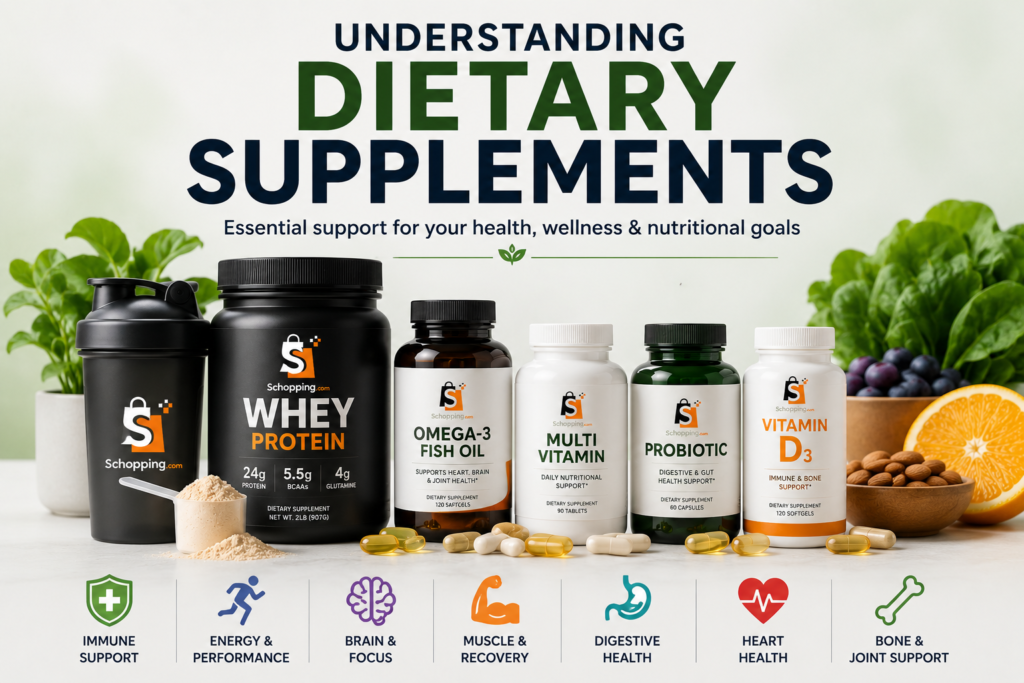
Dietary supplements encompass vitamins, minerals, amino acids, botanical extracts, probiotics, essential fatty acids, proteins, and specialized compounds intended to complement normal dietary intake.
They are not intended to replace nutritious eating patterns but instead help address nutritional gaps or support specific physiological goals.
Major Categories of Dietary Supplements
| Category | Primary Purpose | Examples |
|---|---|---|
| Vitamins | Micronutrient support | Vitamin D, B12 |
| Minerals | Structural and metabolic support | Magnesium, Calcium |
| Protein | Muscle repair | Whey, Plant Protein |
| Essential Fatty Acids | Cardiovascular and brain support | Fish Oil, Omega-3 |
| Digestive Health | Gut microbiome | Probiotics, Prebiotics |
| Botanical Supplements | Traditional wellness support | Ashwagandha, Turmeric |
| Sports Nutrition | Exercise performance | Creatine, Electrolytes |
| Healthy Aging | Cellular support | CoQ10, NAD+, Longevity blends |
Protein Supplements
Protein powders have become increasingly sophisticated, offering formulations tailored to endurance athletes, strength training, healthy aging, meal replacement, and everyday nutrition.
Visit:
Best Protein Powder
Performance Supplements
Performance nutrition now extends beyond bodybuilding.
Modern formulations focus on recovery, hydration, muscle preservation, and cognitive resilience.
Explore:
- Best Creatine Supplements
- Best Electrolyte Powder
Digestive Wellness
The digestive system influences nutrient absorption, immune regulation, and even communication between the gut and brain.
Understanding the distinction between probiotics and prebiotics helps create more effective nutritional strategies.
Continue with:
- Best Probiotic Supplements
- Best Prebiotic Supplements
- Best Fiber Supplements
Healthy Aging Supplements
Long-term wellness increasingly focuses on preserving cellular function rather than simply treating disease.
Popular categories include:
- Best CoQ10 Supplements
- Best NAD Supplements
- Best Longevity Supplements
- Best Collagen Supplements
Understanding Nutrition
Nutrition provides the biological foundation upon which every supplement operates. Without balanced nutrition, supplementation often addresses symptoms rather than underlying deficiencies.
Whole foods deliver thousands of naturally occurring compounds that interact synergistically, including fiber, phytonutrients, antioxidants, enzymes, healthy fats, proteins, and carbohydrates.
The Six Essential Nutrient Groups
| Nutrient | Primary Function |
|---|---|
| Protein | Tissue growth and repair |
| Carbohydrates | Primary energy source |
| Healthy Fats | Hormone production and cellular membranes |
| Vitamins | Metabolic regulation |
| Minerals | Structural and enzymatic support |
| Water | Transport, temperature regulation, metabolism |
Nutrition Pyramid for Modern Wellness
| Priority | Importance |
|---|---|
| Balanced diet | Highest |
| Adequate hydration | Very High |
| Sleep quality | Very High |
| Regular physical activity | Very High |
| Supplementation | Individualized support |
Supplements deliver the greatest value when they build upon an already balanced nutritional foundation.
Supplements vs Vitamins
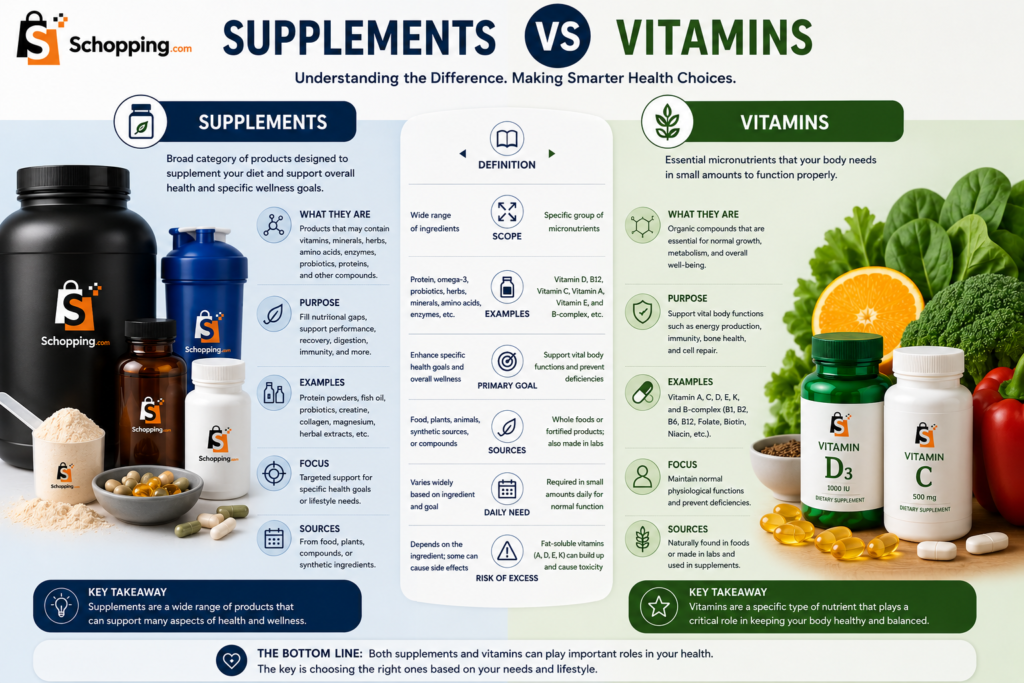
Many individuals use these terms interchangeably, yet they describe different concepts.
A vitamin is one type of nutrient. A supplement is the delivery method that may contain vitamins, minerals, herbs, amino acids, probiotics, proteins, or numerous other compounds.
Comparison Table
| Feature | Vitamins | Supplements |
|---|---|---|
| Definition | Essential micronutrients | Products containing nutritional ingredients |
| Includes minerals | No | Yes |
| Includes herbs | No | Yes |
| Includes proteins | No | Yes |
| Includes probiotics | No | Yes |
| Available through food | Yes | Some |
| Sold as capsules | Yes | Yes |
Which Should You Choose?
The better question is not “vitamins vs supplements.”
Instead, ask:
- What nutritional gap exists?
- Can food realistically solve it?
- Is supplementation supported by individual needs?
- Is quality more important than quantity?
These questions encourage informed decisions rather than unnecessary supplementation.
Choosing the Right Supplement Strategy
No universal supplement plan exists because nutritional needs change throughout life.
Step 1: Define Your Goal
Examples include:
- Immune support
- Athletic performance
- Better sleep
- Digestive health
- Healthy aging
- Bone health
- Heart health
- Cognitive performance
Step 2: Evaluate Daily Nutrition
Ask whether your meals consistently include:
✓ Fruits
✓ Vegetables
✓ Lean protein
✓ Healthy fats
✓ Whole grains
✓ Dairy or fortified alternatives
Step 3: Identify Potential Nutritional Gaps
| Lifestyle | Possible Nutritional Considerations |
|---|---|
| Vegan | Vitamin B12, Omega-3 |
| Older adult | Vitamin D, Calcium |
| Athlete | Protein, Creatine, Electrolytes |
| Office worker | Vitamin D |
| Digestive disorders | Individual assessment |
Step 4: Prioritize Quality
High-quality supplements typically emphasize:
- Transparent ingredient lists
- Appropriate dosages
- Independent quality testing
- Minimal unnecessary fillers
- Clear manufacturing standards
Decision Framework
| Goal | First Priority | Second Priority |
|---|---|---|
| Muscle growth | Nutrition | Protein |
| Bone health | Vitamin D | Calcium |
| Gut health | Fiber | Probiotics |
| Recovery | Protein | Electrolytes |
| Longevity | Lifestyle | Targeted supplementation |
Upcoming Trends & Latest Research
The supplement industry is rapidly evolving beyond traditional vitamins.
Personalized Nutrition
Advances in genetic testing, blood biomarkers, and lifestyle assessments are encouraging more individualized nutritional strategies rather than one-size-fits-all recommendations.
Precision Micronutrient Formulations
Future products are increasingly designed for specific populations, such as older adults, athletes, office professionals, women during pregnancy, and individuals following plant-based diets.
Microbiome Science
Researchers continue exploring how gut microorganisms influence immunity, mood, metabolism, inflammation, and nutrient absorption, leading to more sophisticated probiotic and prebiotic formulations.
Longevity Research
Growing interest in healthy aging has accelerated innovation surrounding mitochondrial health, cellular energy production, antioxidant protection, and age-related nutritional support.
Improved Delivery Technologies
Emerging supplement formats include:
- Liposomal delivery
- Delayed-release capsules
- Microencapsulation
- Time-release tablets
- Liquid concentrates
- Functional gummies
- Precision dosing sachets
Sustainability
Consumers increasingly evaluate environmental impact alongside nutritional quality.
Areas receiving greater attention include:
- Plant-based ingredients
- Sustainable marine oils
- Eco-friendly packaging
- Traceable ingredient sourcing
- Reduced manufacturing waste
Frequently Asked Questions
What vitamins should I take daily for overall health?
There is no universal supplement suitable for everyone. Nutritional requirements depend on age, dietary habits, medical history, physical activity, sunlight exposure, and individual health goals.
| Priority | Recommendation |
|---|---|
| Balanced diet | Essential |
| Sleep | Essential |
| Exercise | Essential |
| Individual supplementation | Based on needs |
Are dietary supplements better than whole foods?
Whole foods remain the primary source of nutrition because they provide thousands of naturally occurring compounds that work together.
Supplements complement a healthy diet—they do not replace it.
| Whole Foods | Supplements |
|---|---|
| Complete nutrition | Targeted support |
| Fiber | Usually absent |
| Phytonutrients | Limited |
| Daily meals | Nutritional gaps |
Can you take multiple vitamins together?
Many vitamins are commonly combined within multivitamin formulations. However, combining several individual supplements without considering total intake may increase the likelihood of excessive consumption of certain nutrients.
Review ingredient labels carefully and consider professional guidance when using multiple products simultaneously.
How do I choose the best supplements for overall health?
Evaluate products using several quality indicators rather than marketing claims alone.
| Evaluation Factor | Importance |
|---|---|
| Ingredient transparency | Excellent |
| Manufacturing quality | Excellent |
| Evidence-based dosages | Excellent |
| Third-party testing | High |
| Reputation | High |
Are expensive supplements always better?
Not necessarily.
Higher prices may reflect premium ingredients or specialized formulations, but cost alone does not guarantee superior quality or effectiveness.
Focus on formulation quality, ingredient sourcing, manufacturing standards, and suitability for your individual needs.
People Also Ask
What is the difference between nutrition and supplementation?
Nutrition encompasses everything consumed through food and beverages, while supplementation provides additional nutrients intended to complement—not replace—a balanced dietary pattern.
| Nutrition | Supplementation |
|---|---|
| Daily eating habits | Additional support |
| Complete dietary pattern | Specific nutrients |
| Long-term foundation | Targeted enhancement |
Can vitamins improve energy levels?
Vitamins contribute to normal energy metabolism by supporting biochemical processes involved in converting food into usable energy. They do not function like stimulants, and noticeable improvements are generally associated with correcting an underlying nutritional deficiency rather than providing an immediate energy boost.
Is it safe to take supplements every day?
Many supplements are designed for daily use, but long-term intake should always align with the product’s intended purpose, recommended serving size, and individual nutritional needs.
| Daily Use Consideration | Importance |
|---|---|
| Follow serving directions | High |
| Avoid unnecessary duplication | High |
| Monitor total intake | High |
How long does it take for supplements to work?
The timeline depends on the nutrient, the individual’s health status, and the intended outcome. Some nutritional improvements may become noticeable within weeks, while others, particularly those supporting long-term health, require consistent use over several months.
Are natural supplements always safer?
The term “natural” does not automatically indicate superior safety or effectiveness. Every supplement should be evaluated based on ingredient quality, appropriate dosage, manufacturing standards, potential interactions, and individual suitability rather than marketing terminology alone.
Editorial Insights
The supplement industry has expanded from basic multivitamins into an advanced ecosystem of precision nutrition, microbiome science, longevity research, sports performance, personalized health testing and functional ingredients.
Understanding this rapidly evolving landscape requires more than product rankings. It requires understanding biological purpose, ingredient quality, scientific plausibility and realistic expectations.
The sections that follow examine these topics in depth, beginning with the essential role of vitamins within human physiology.